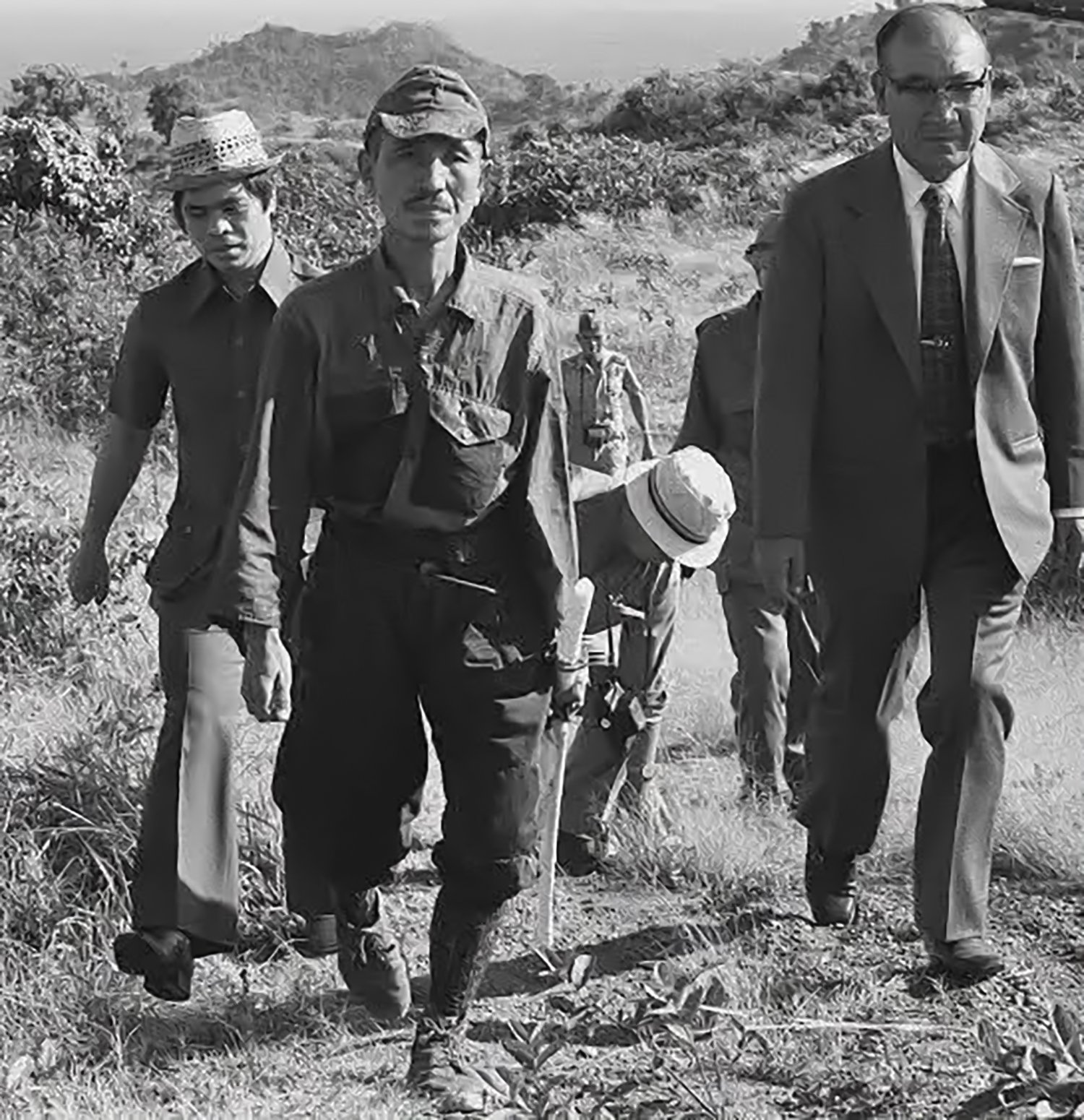
Hiroo Onoda became one of the most famous “holdouts” of World War II, and his story is even more remarkable than the caption suggests.
Onoda was a second lieutenant in the Imperial Japanese Army who was sent to Lubang Island in the Philippines in December 1944. Before leaving, he received orders not to surrender and not to take his own life. When Japan surrendered in August 1945, leaflets announcing the end of the war were dropped on the island, but Onoda and a handful of other soldiers believed they were Allied propaganda.
For years, the group survived by living in the jungle, stealing food, and occasionally exchanging fire with local authorities. One by one, the other holdouts died or surrendered, leaving Onoda alone by 1972.
In 1974, a Japanese adventurer named Norio Suzuki tracked him down and befriended him. However, Onoda insisted he would only surrender if ordered to do so by a superior officer. The Japanese government located his former commander, Yoshimi Taniguchi, who flew to Lubang and formally relieved him of duty on March 9, 1974.
Onoda emerged from the jungle still wearing much of his uniform and carrying his rifle, ammunition, sword, and other equipment. Remarkably, his Arisaka rifle was still operational after nearly three decades.
Added Fact: During his 29 years on Lubang, Onoda and his companions conducted guerrilla activities that resulted in the deaths of around 30 Filipino civilians and police officers and wounded many others. While many in Japan viewed him as a symbol of loyalty and perseverance, his legacy remains more complicated in the Philippines, where memories of those incidents endured long after his surrender.
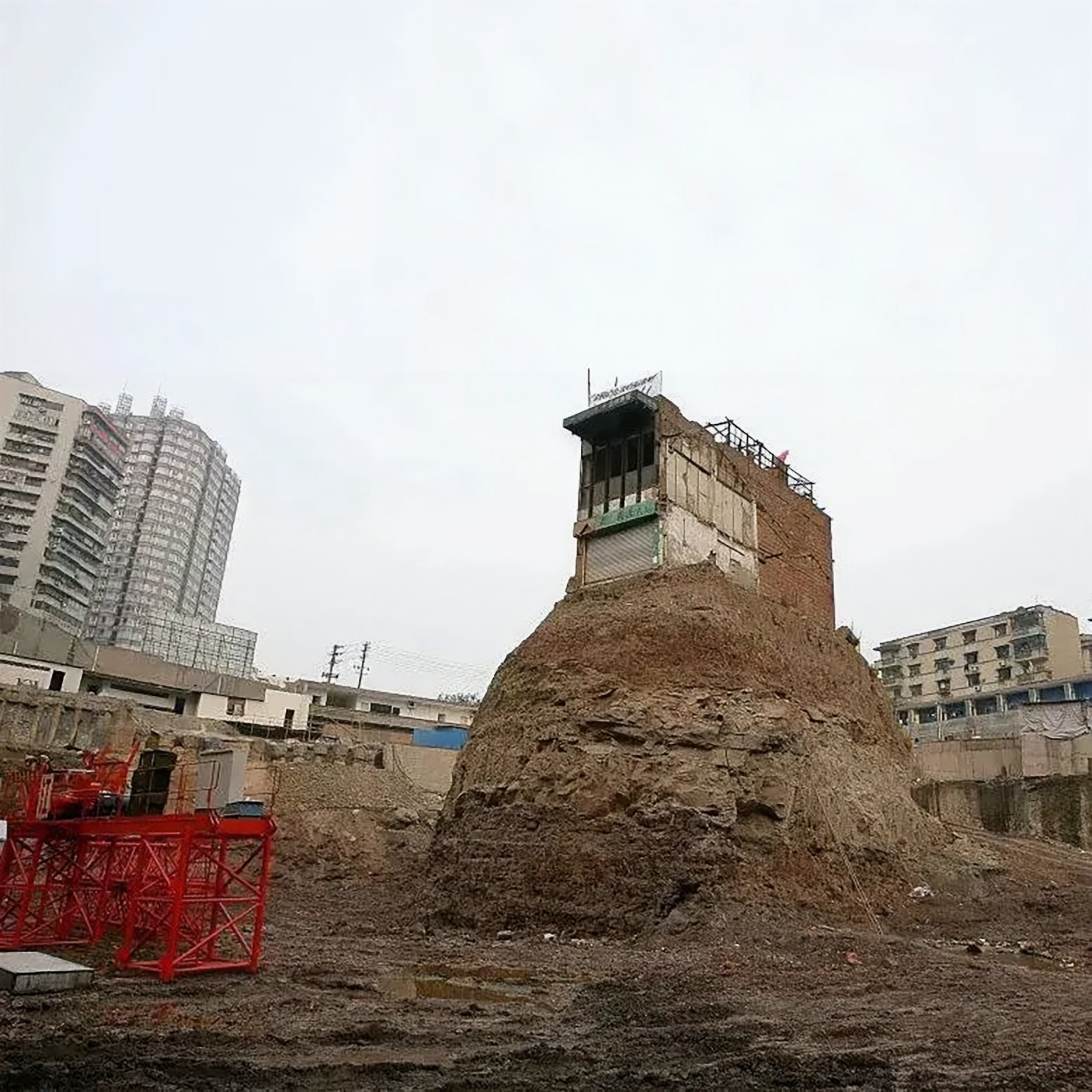
This photograph became one of the most famous examples of a Chinese “nail house”, a term used for property owners who refuse to move despite pressure from developers. The image was taken in 2007 in the city of Chongqing, where homeowner Wu Ping and her husband became national figures after refusing compensation offers to vacate their property.
As excavation proceeded around the site, the house was left perched atop a mound of earth in the middle of a massive construction pit. Utilities were reportedly cut, and access became increasingly difficult, turning the home into a symbol of resistance against powerful development interests.
The dispute attracted enormous media attention throughout China. At the time, China’s rapid urbanization was transforming cities at an unprecedented pace, with millions of residents being relocated for highways, apartment towers, shopping centers, and infrastructure projects. Many citizens saw the case as a test of newly strengthened private property rights.
After weeks of negotiations and national publicity, Wu Ping and her husband eventually reached a settlement with developers and moved out. The house was demolished shortly afterward.
Added Fact: The term “nail house” comes from the idea of a stubborn nail that sticks up and cannot be hammered down. Similar cases have appeared throughout China, sometimes delaying multi-million-dollar construction projects. The Chongqing dispute became so famous that it was discussed internationally and is often cited as a landmark moment in China’s evolving debate over private property rights and urban redevelopment.
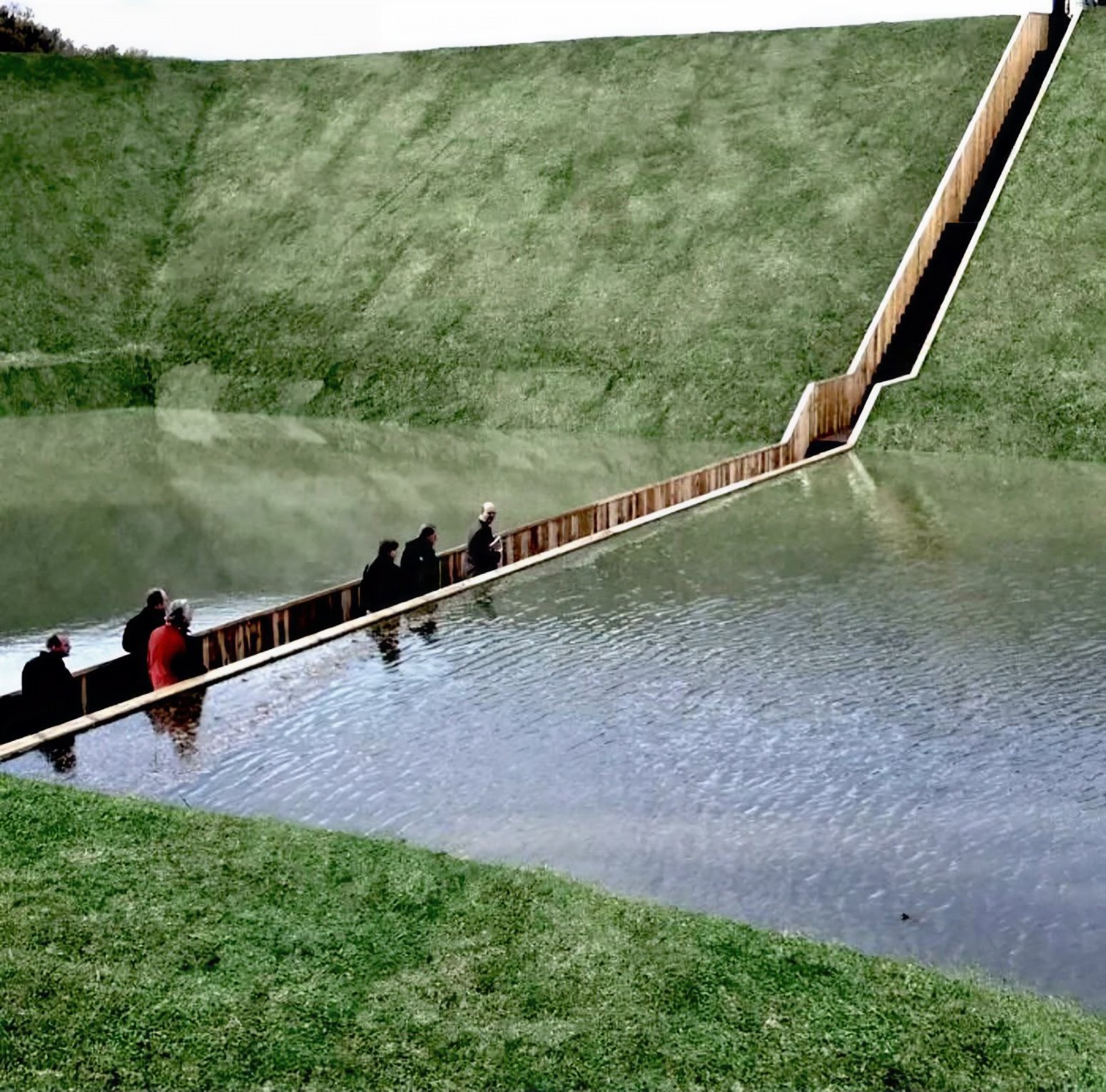
The Moses Bridge is one of the most innovative pieces of modern landscape architecture in the Netherlands. Completed in 2010 near the village of Halsteren, it was designed to provide access to Fort de Roovere, a 17th-century star fort that was part of the Dutch Water Line defense system.
Rather than building a traditional bridge over the moat, architects from the firm RO&AD Architecten chose to create a sunken walkway that cuts through the water. The design gives visitors the impression of walking through the moat itself, which inspired the nickname “Moses Bridge” after the biblical story of Moses parting the sea.
The bridge is constructed primarily from sustainably sourced wood treated to resist water damage. Hidden retaining walls hold back the water on both sides, allowing the path to remain dry while preserving the historic appearance of the fort. The project received international acclaim and won several architectural awards, including recognition from the Dutch Design Awards.
Fort de Roovere was originally built in the 1620s during the Dutch struggle against Spanish rule. It formed part of a defensive network that used controlled flooding to hinder invading armies, a strategy that protected the Netherlands for centuries.
Added Fact: The Dutch perfected “water as a weapon” through systems such as the Dutch Water Line. By flooding land to a depth of only about 12–18 inches (30–45 cm), too deep for soldiers to march through but too shallow for boats, they created vast defensive barriers that proved remarkably effective from the 17th through the 20th centuries.
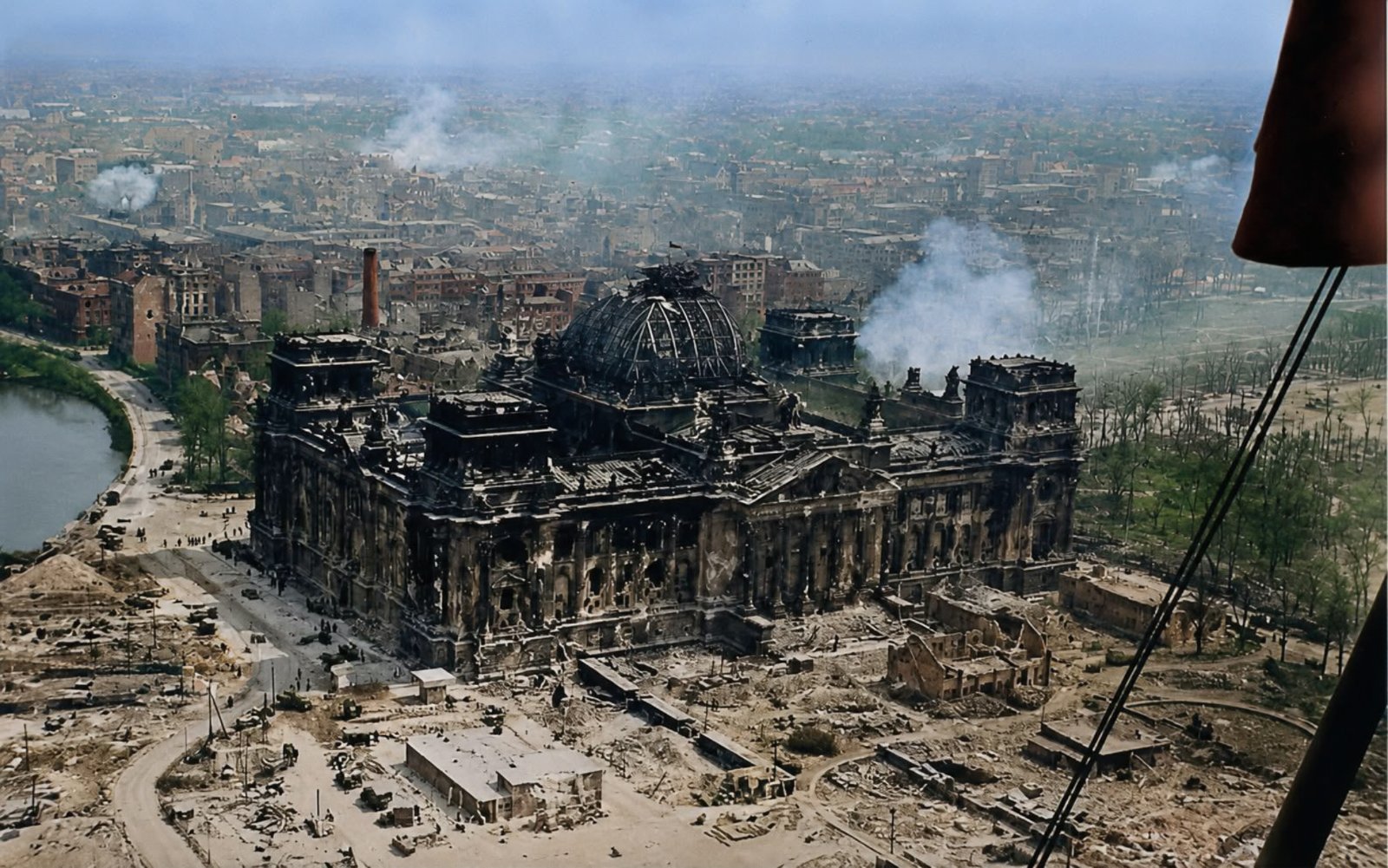
This is the Reichstag on May 1, 1945, captured in a photo taken by a Pravda military correspondent from a Po-2 aircraft.
The lessons of World War II are sad, mournful and tragic. Let us not forget them, for the sake of the future generations, let us always remember the heroes from all allied countries, who gave their lives for our peaceful world and all human losses and let us do all in our power to prevent the devastating tragedies of such scale from happening in the future.
De image offers a glimpse into the daily lives of working-class families in the United States during that era.
The kitchen environment suggests the difficult conditions in which these families lived and worked in the steel industry.
Some observers have speculated that the children may show signs of ricket, a condition that was more common in poorer families at the time due to vitamin deficiency.
During the Cold War, the United States maintained thousands of military aircraft in active service and reserve fleets. As newer jet aircraft entered service in the 1950s and 1960s, large numbers of older planes were retired and sent to aircraft storage and reclamation facilities, commonly known as “boneyards.” The largest of these facilities was Davis-Monthan Air Force Base in Arizona, whose dry climate and hard soil made it ideal for long-term aircraft preservation.
Aircraft stored in these boneyards were not always destined for the scrapyard. Many were maintained in reserve status, cannibalized for spare parts, converted for other uses, or reactivated during military emergencies. During the Vietnam War, for example, dozens of aircraft previously placed in storage were returned to operational service.
By the mid-1960s, the U.S. Air Force inventory still exceeded 15,000 aircraft, reflecting the enormous military buildup of the post-World War II and early Cold War eras.
Added Fact: During the Korean War, the U.S. military reactivated more than 1,000 aircraft from storage.Even today, the 309th Aerospace Maintenance and Regeneration Group at Davis-Monthan maintains over 4,000 retired military aircraft and remains the largest aircraft storage facility in the world.
In 1936, a small one-room home stood in a field between Camden and Bruceton, Tennessee, built on the chassis of a discarded automobile. Using reclaimed lumber, scrap materials, and determination, its occupants transformed what others had abandoned into a place they could call home.
Though modest in size, the shelter provided protection from the elements and represented the resourcefulness that defined an entire generation. Every board, nail, and salvaged piece reflected the belief that even in the hardest times, hard work and ingenuity could create hope where resources were scarce.
Historic scenes like this remind us that resilience isn’t measured by what people own, but by how they adapt, persevere, and build a future from whatever they have. Even in the depths of economic hardship, families continued to create homes filled with determination, courage, and hope.
The Codex Gigas, the largest extant medieval illuminated manuscript in the world, at a length of 92 cm (36 in), at the National Library of Sweden in Stockholm, Sweden in 1906.
The Codex Gigas, often called the “Devil’s Bible,” was created in the early 13th century, most likely between 1224 and 1230, at the Benedictine monastery of Podlažice in what is now the Czech Republic. Weighing approximately 75 kg (165 lbs) and containing 310 parchment leaves made from the skins of an estimated 160 donkeys or calves, it remains the largest surviving medieval illuminated manuscript.
The manuscript contains the complete Latin Vulgate Bible, as well as historical texts by Josephus, medical treatises, calendars, exorcism formulas, and penitential texts.Its nickname derives from a full-page illustration of the Devil, one of the largest known medieval depictions of Satan. According to legend, a monk created the entire manuscript in a single night after making a pact with the Devil, although scholars estimate it would have required at least 20 to 30 years of work.
Added Fact: The Codex Gigas was taken to Sweden by the Swedish army as war booty during the Thirty Years’ War in 1648. It survived a devastating fire at Stockholm’s Royal Castle in 1697 after being thrown from a window to save it from the flames.
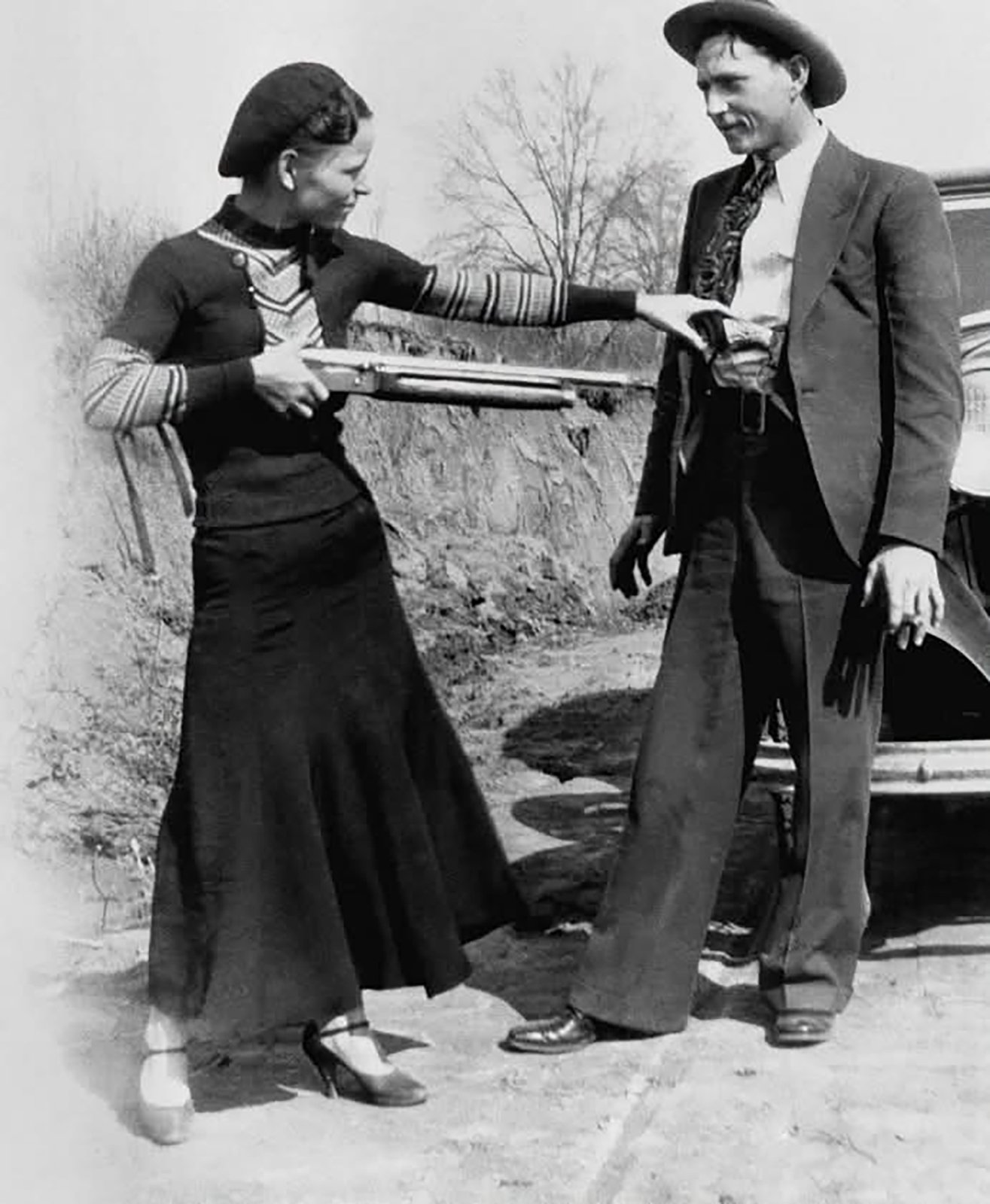
Bonnie Parker and Clyde Barrow became two of the most famous outlaws of the Great Depression after a crime spree that stretched across multiple states between 1932 and 1934. This photograph was recovered by law enforcement from one of the gang’s hideouts in Joplin, Missouri, after a shootout in April 1933. The images were later released to newspapers and played a major role in turning the pair into national celebrities.
The Barrow Gang was responsible for a series of robberies, burglaries, and killings that left at least 13 people dead, including several law enforcement officers. While later films often portrayed them as bank robbers, most of their crimes involved stealing automobiles, robbing small businesses, and burglarizing stores and gas stations.
The discovery of photographs from the Joplin hideout shocked the public. The images showed the gang joking, posing with weapons, and appearing far different from the desperate criminals described in police reports. Newspapers across the country published the photos, helping create the Bonnie and Clyde legend that survives today.
On May 23, 1934, the pair were killed in a law enforcement ambush near Bienville Parish, Louisiana. Their car was struck by more than 100 rounds of gunfire.
Added Fact: The Joplin hideout photos were so widely reprinted that they became some of the most famous criminal photographs in American history, helping define the public image of Bonnie and Clyde for generations.