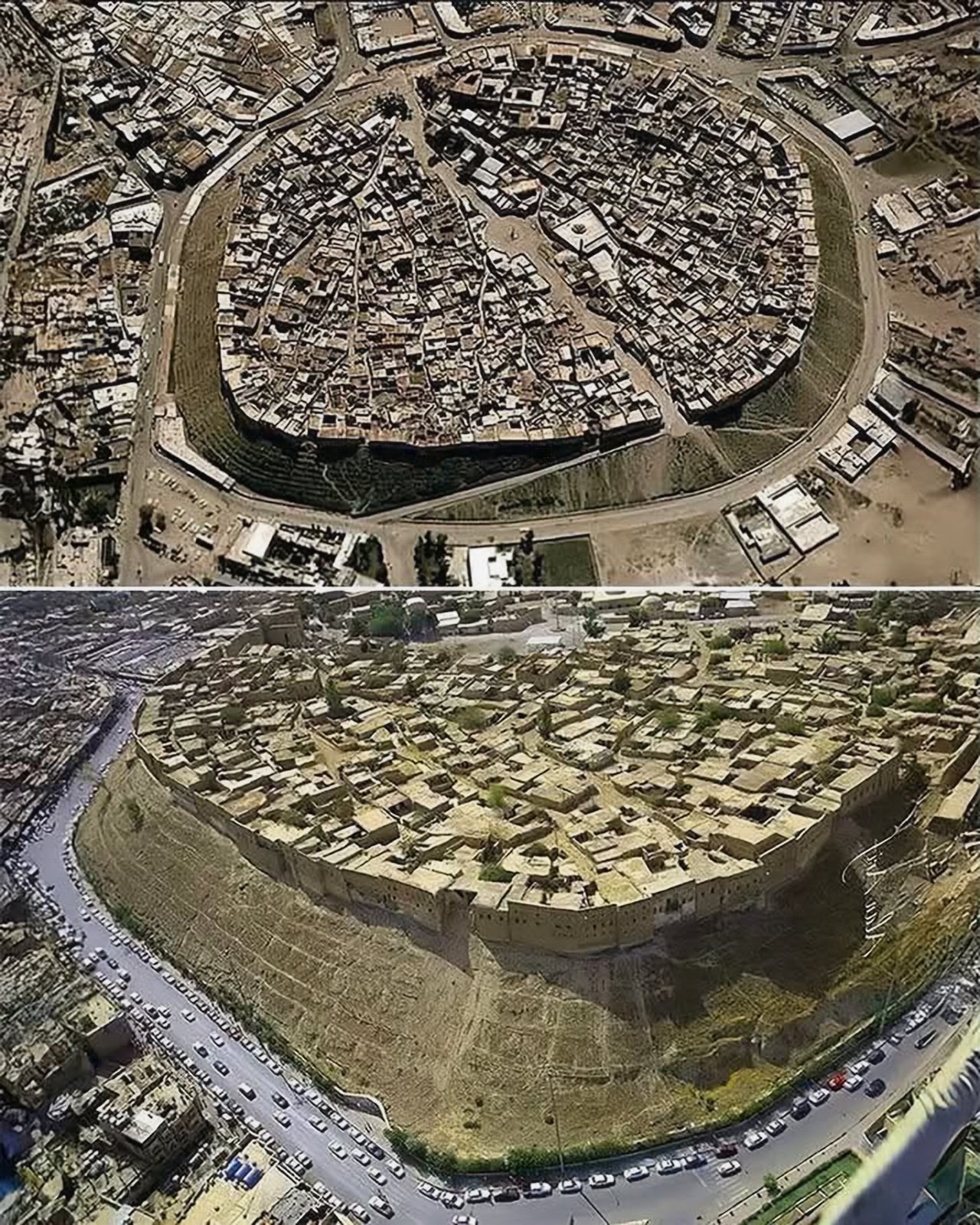
The Erbil Citadel is one of the most remarkable urban sites in the world. Rising about 100 feet (30 meters) above the surrounding city on a large artificial mound, the citadel occupies a strategic position that has attracted settlers for millennia.
Located in Erbil, the site has yielded evidence of occupation dating back at least to the 5th millennium BC, and possibly earlier. Over its long history, it has been ruled by or associated with the Sumerians, Akkadians, Assyrians, Babylonians, Persians, Greeks under Alexander the Great, Parthians, Romans, Arabs, Mongols, Ottomans, and modern Iraq.
The city’s ancient name, Arbela, appears in cuneiform records more than 4,000 years old. It was an important religious center of the Assyrian Empire, particularly for the worship of the goddess Ishtar. In 331 BC, the nearby Battle of Gaugamela effectively ended the Achaemenid Persian Empire and opened the way for Alexander’s conquest of the Near East.
In 2014, the citadel was designated a UNESCO World Heritage Site, recognizing its extraordinary historical significance.
Added Fact: Unlike many famous ancient cities that were abandoned and later rediscovered, Erbil remained inhabited through nearly every major era of Middle Eastern history. This continuity makes it one of the strongest contenders for the title of the world’s oldest continuously inhabited urban settlement, alongside places such as Jericho and Damascus.