
Scarlett Ingrid Johansson is an American actress, singer, producer, and director. At age nine, Johansson landed her first paid role as a sketch character on an episode of Late Night with Conan O’Brien.

Hier vind je allerlei foto's die ik in de loop der jaren heb gemaakt of verzameld








Martina Stella
Italian actress and screenwriter.
Stella made her cinematic debut at the age of 16 in 2001 in L’ultimo bacio. The film was a success in Italy,and was nominated for multiple David di Donatello awards, including Best Film.
https://en.wikipedia.org/wiki/Martina_Stella#Television






Alicia Arden
American actress.
Known for portraying Nurse Theresa Carter on the ABC daytime soap opera General Hospital.
https://general-hospital.fandom.com/wiki/Alicia_Arden


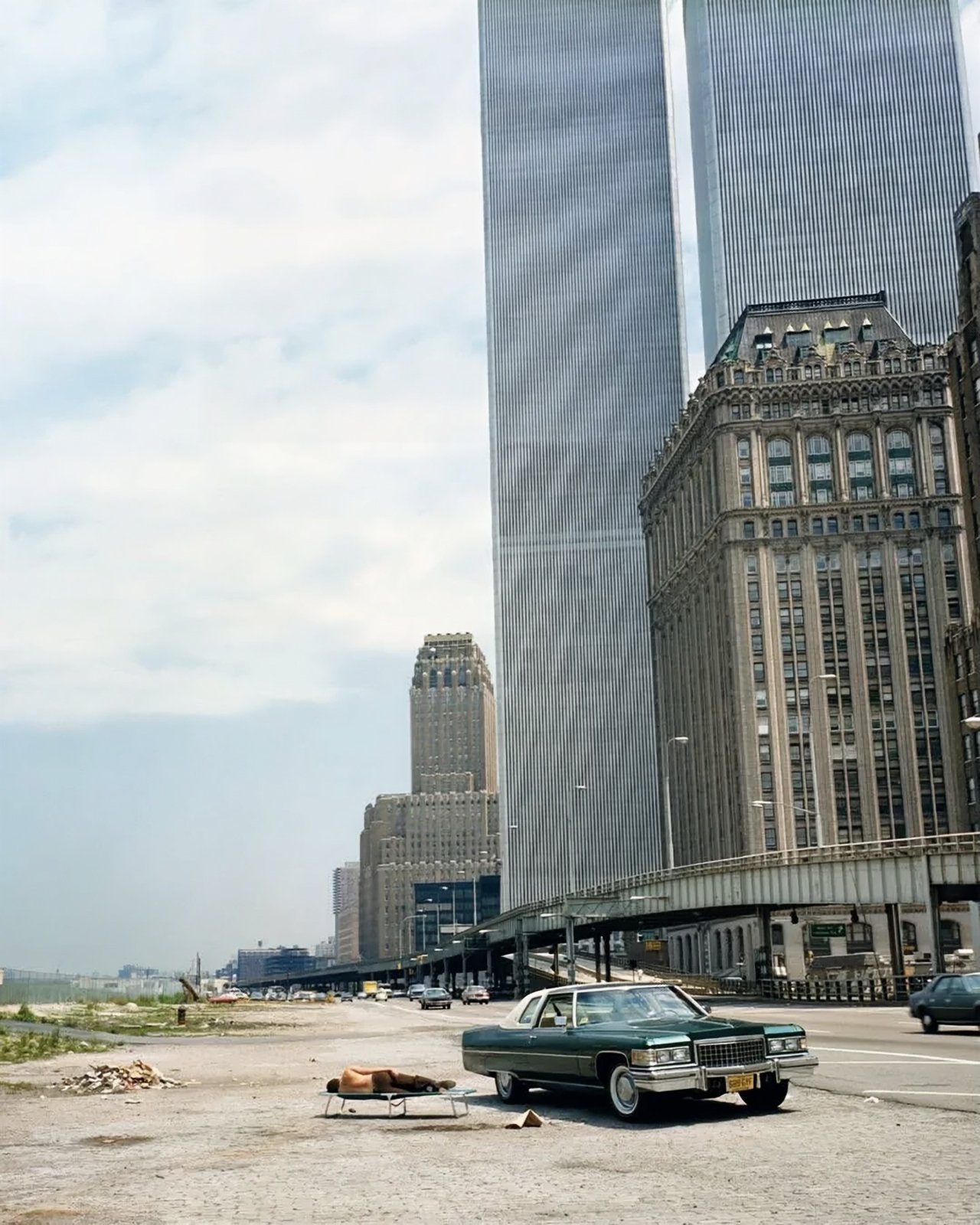
In ’77, New York was emerging from the fiscal crisis of 1975, when the city came dangerously close to bankruptcy. Crime rates were high, many neighborhoods were losing population, and large tracts of waterfront and industrial land sat vacant or underused.
The recently completed World Trade Center towers dominate the skyline. At the time, they were among the tallest buildings in the world, standing 1,368 and 1,362 feet tall. Yet despite their immense scale, the surrounding area still contained vast stretches of undeveloped land, parking lots, warehouses, and decaying piers.
The photograph also highlights a forgotten aspect of Manhattan’s history: before luxury towers, waterfront parks, and billion-dollar real estate developments transformed the West Side, parts of Lower Manhattan retained an almost industrial frontier atmosphere. Land that would be worth millions of dollars today could sit nearly empty.
Added Fact: In the late 1970s, New York City’s population had fallen below 7.1 million after peaking at nearly 7.9 million in 1950. Many experts believed the city’s best days were behind it. Instead, New York would experience one of the most dramatic urban revivals in modern history, growing to more than 8.8 million residents and becoming one of the world’s most valuable real estate markets.
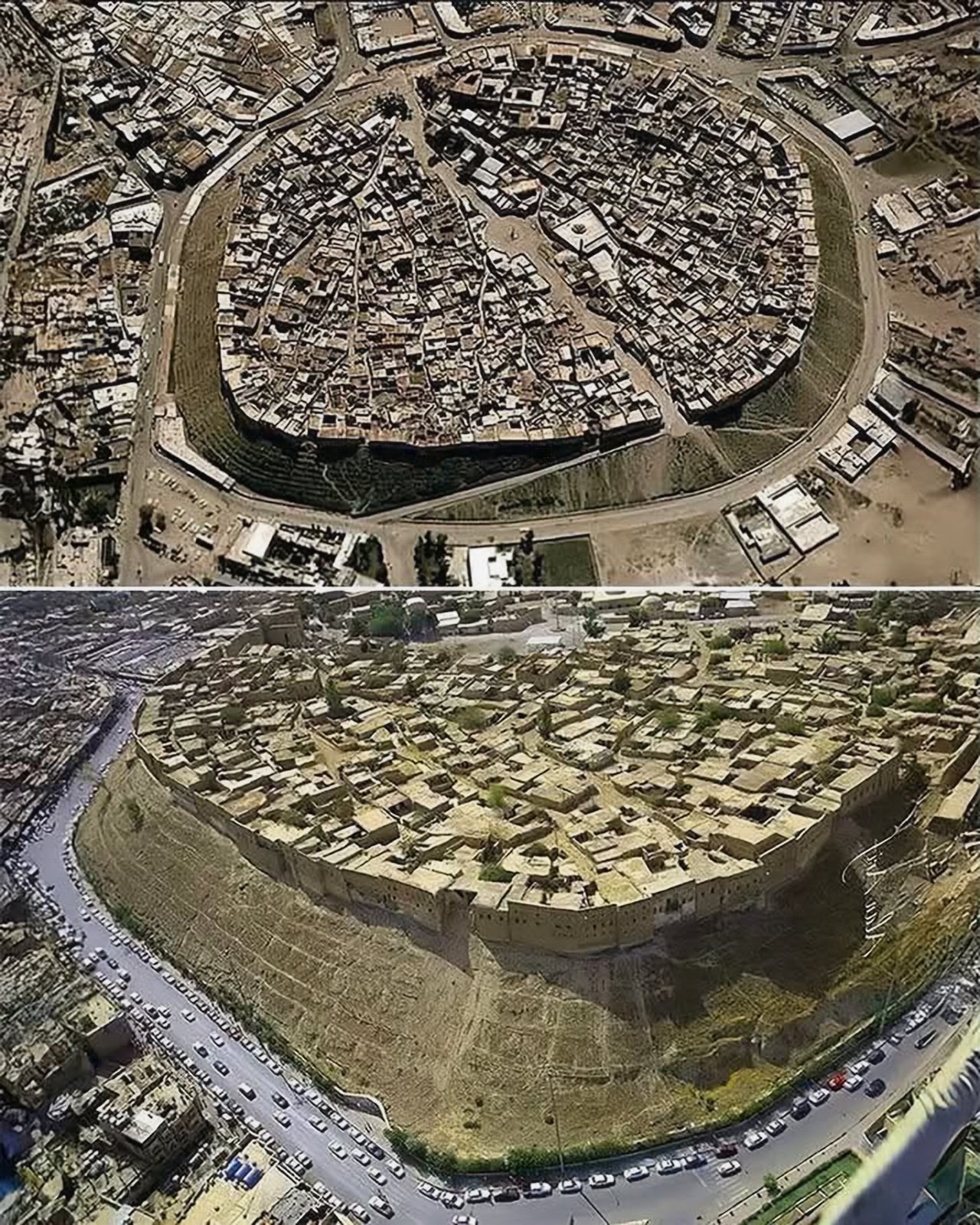
The Erbil Citadel is one of the most remarkable urban sites in the world. Rising about 100 feet (30 meters) above the surrounding city on a large artificial mound, the citadel occupies a strategic position that has attracted settlers for millennia.
Located in Erbil, the site has yielded evidence of occupation dating back at least to the 5th millennium BC, and possibly earlier. Over its long history, it has been ruled by or associated with the Sumerians, Akkadians, Assyrians, Babylonians, Persians, Greeks under Alexander the Great, Parthians, Romans, Arabs, Mongols, Ottomans, and modern Iraq.
The city’s ancient name, Arbela, appears in cuneiform records more than 4,000 years old. It was an important religious center of the Assyrian Empire, particularly for the worship of the goddess Ishtar. In 331 BC, the nearby Battle of Gaugamela effectively ended the Achaemenid Persian Empire and opened the way for Alexander’s conquest of the Near East.
In 2014, the citadel was designated a UNESCO World Heritage Site, recognizing its extraordinary historical significance.
Added Fact: Unlike many famous ancient cities that were abandoned and later rediscovered, Erbil remained inhabited through nearly every major era of Middle Eastern history. This continuity makes it one of the strongest contenders for the title of the world’s oldest continuously inhabited urban settlement, alongside places such as Jericho and Damascus.
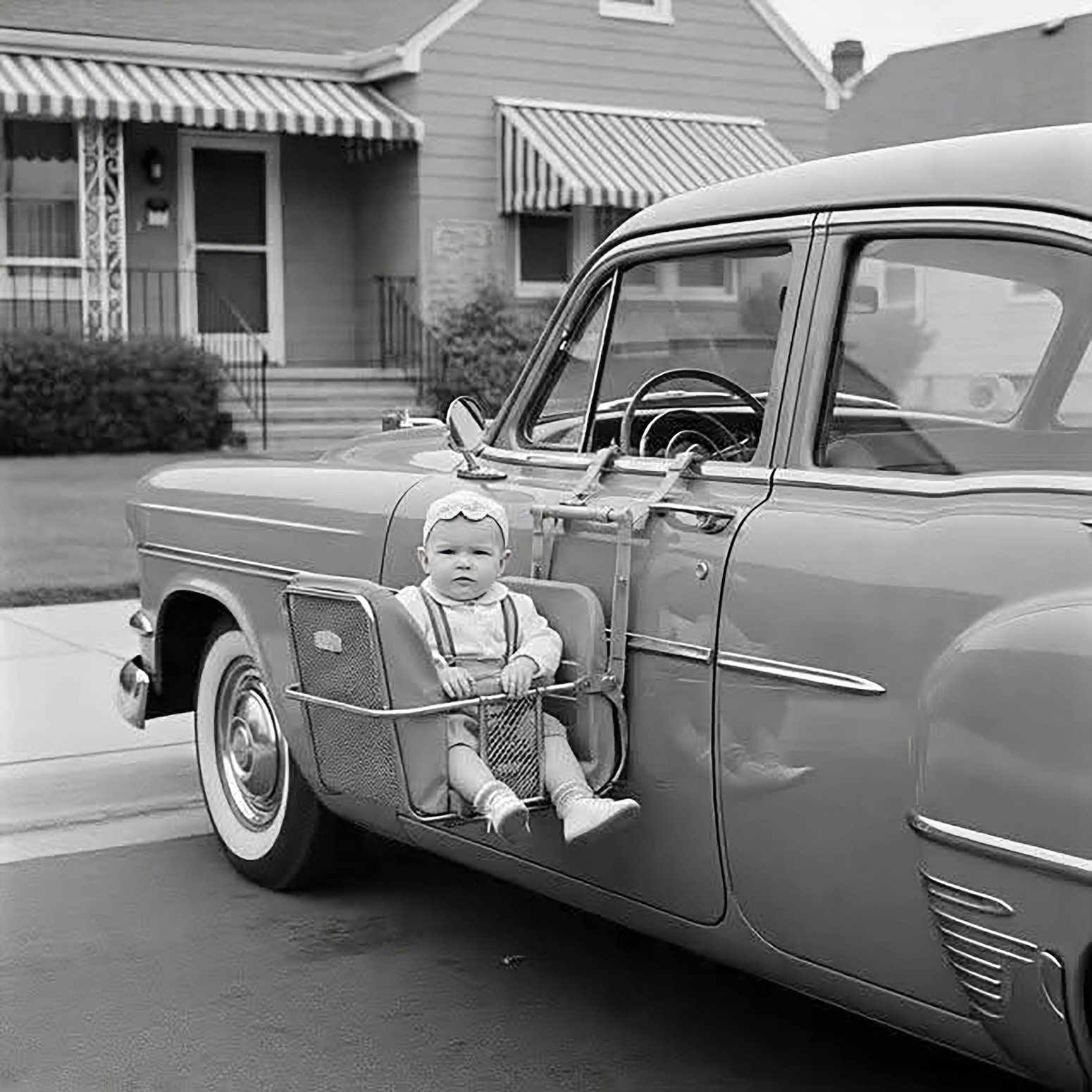
The “car-mounted baby seat” shown here is a good reminder that automotive safety standards were dramatically different in the 1950s. At the time, many parents viewed cars as relatively safe environments, and the primary concern was often keeping children occupied or allowing them a better view of the road rather than protecting them during a collision.
During the 1950s, seat belts were rare in American cars. Most vehicles did not include them as standard equipment, and there were no federal crash-test requirements. Child restraints, when used at all, were often designed to elevate children rather than secure them. Some manufacturers and inventors marketed external or door-mounted seats, believing fresh air and visibility would make travel more enjoyable.
Modern child passenger safety research eventually transformed these practices. The widespread adoption of crash testing, mandatory seat belts, child safety seats, and later airbags contributed to a dramatic reduction in vehicle fatalities. Today, properly installed child restraints are estimated to reduce the risk of fatal injury for infants by more than 70% in passenger vehicles.
Added Fact: The first modern three-point seat belt was developed by Nils Bohlin for Volvo Cars in 1959. Volvo made the patent available to other manufacturers, a decision credited with helping save millions of lives worldwide.
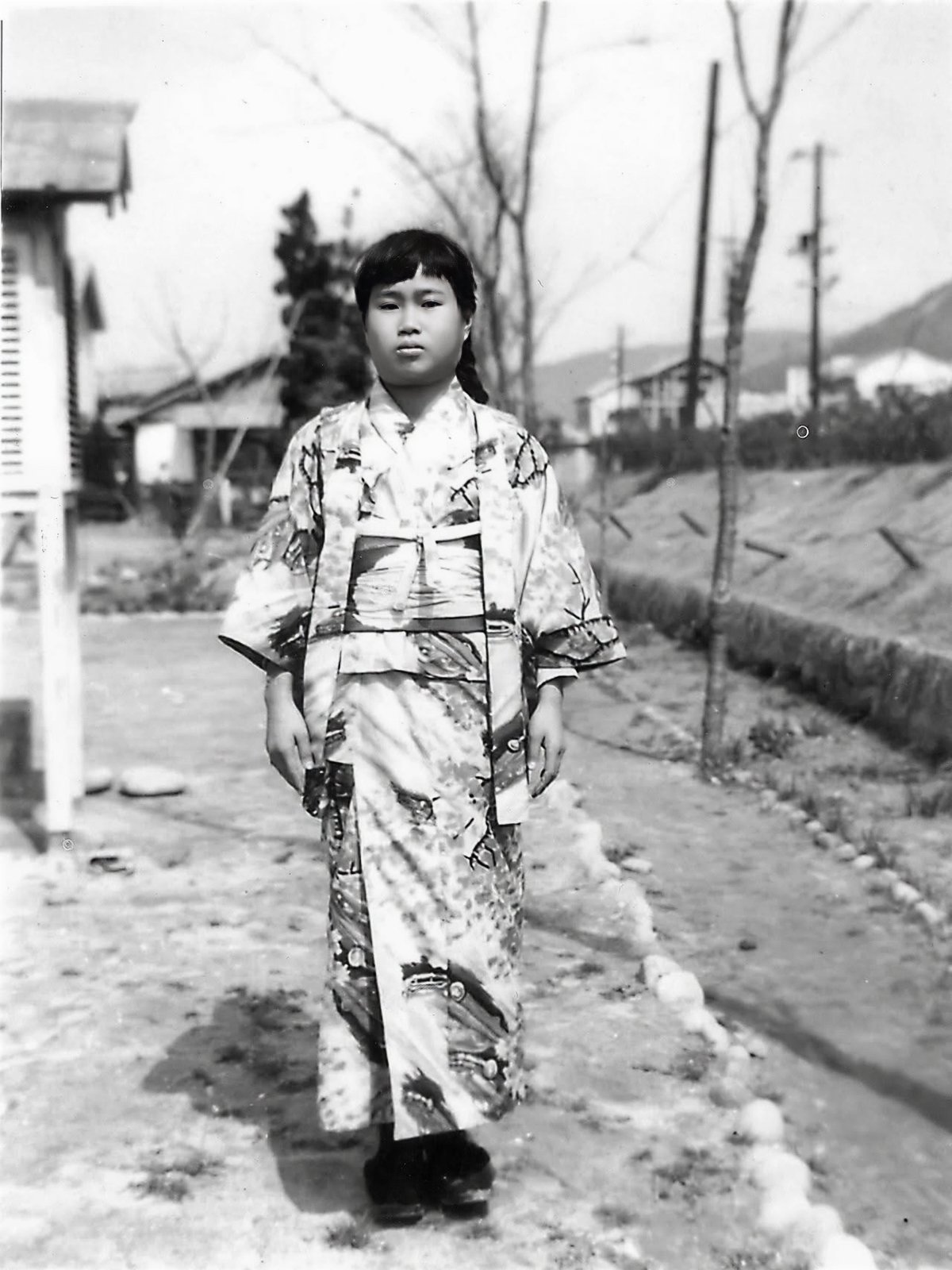
She had survived the Hiroshima bombing but was heavily irradiated, which gave her leukemia a decade later. She died on October 25, 1955 at age 12, becoming a symbol of the effects of nuclear war. In the hospital before her death she folded more than 1,000 paper cranes.
On August 6, 1945, when the United States dropped the atomic bomb on Hiroshima, Sadako was just two years old. She survived the initial blast, which killed an estimated 70,000–80,000 people instantly. However, like many survivors, she was exposed to radiation. Nearly a decade later, in 1954, she was diagnosed with leukemia, often called the “atomic bomb disease” in postwar Japan.
While hospitalized, Sadako learned of a Japanese legend that anyone who folds 1,000 paper cranes will be granted a wish. She began folding cranes and hoping for recovery. Accounts differ on the exact number she completed before her death, some say she exceeded 1,000, while others suggest friends and family helped finish the total after she died, but the crane became inseparably linked to her story.
Sadako died on October 25, 1955, at age 12. Her classmates later helped raise funds for a memorial to all children affected by the atomic bomb.
Added Fact: In 1958, the Children’s Peace Monument was unveiled in Hiroshima. At its top stands a statue of Sadako holding a golden crane. Every year, children from around the world send millions of folded paper cranes to the monument as messages of peace, making her one of the most recognized symbols of the global anti-nuclear movement.
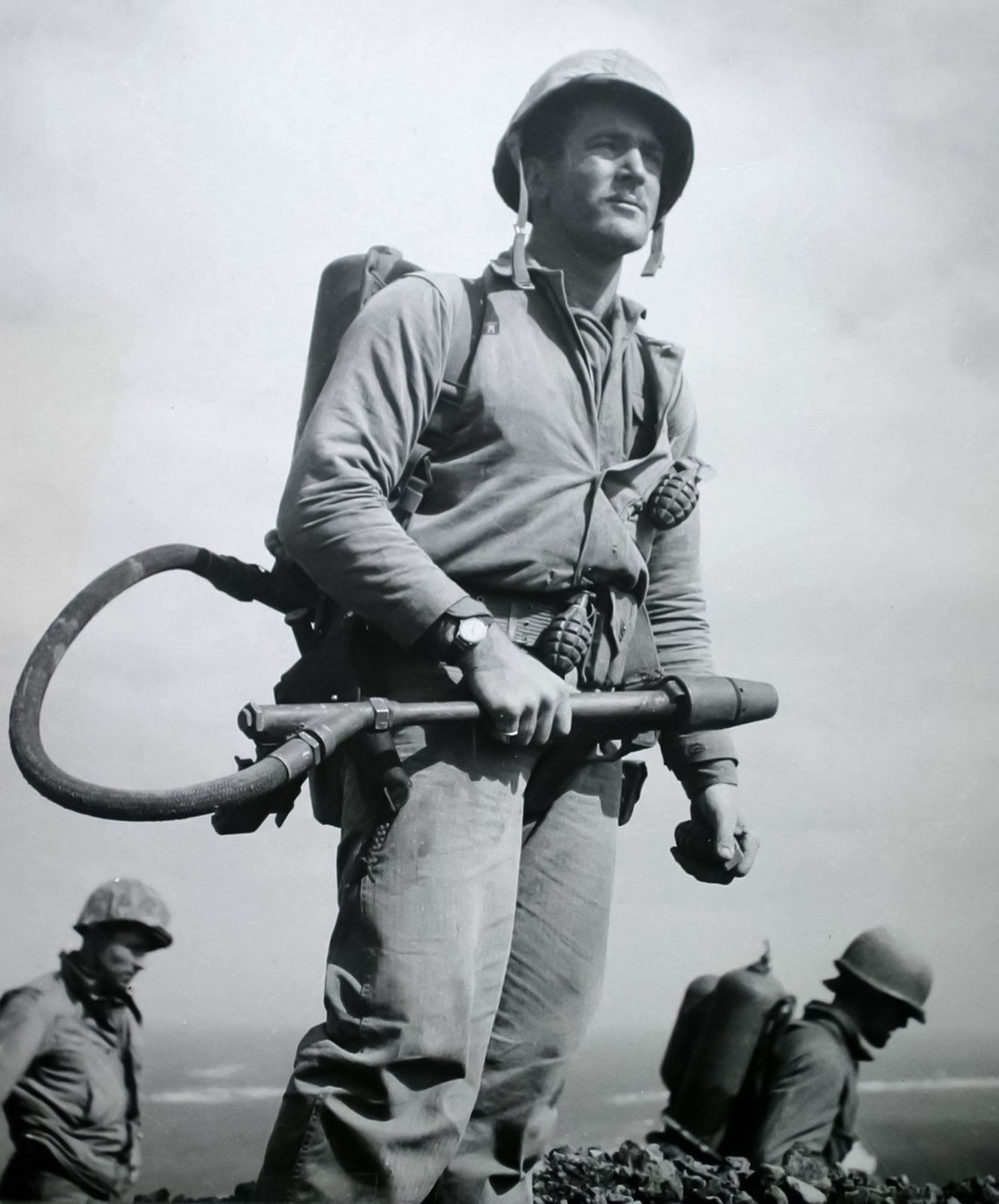
Lindberg is carrying an M2 flamethrower near the summit of Mount Suribachi. Flamethrower operators had one of the most dangerous jobs in the U.S. military. Japanese defenders often fought from heavily fortified bunkers, tunnels, and caves that were difficult to destroy with conventional weapons. Flamethrowers could force defenders out of these positions or destroy them outright, making the weapon a critical tool in the island campaigns of the Pacific.
The Battle of Iwo Jima lasted from February 19 to March 26, 1945. Although Mount Suribachi was secured within the first week, the majority of the fighting occurred in the island’s northern sectors, where thousands of Japanese troops continued resisting from an elaborate underground defense network.
Flamethrower operators faced exceptionally high casualty rates. The fuel tanks they carried made them highly visible targets, and enemy soldiers often prioritized them for elimination. Despite the danger, Marines repeatedly credited flamethrower teams with helping reduce fortified positions that would otherwise have cost many more lives.
Added Fact: The U.S. military used approximately 6,500 flamethrowers in the Pacific Theater during World War II. On Iwo Jima alone, flamethrowers were so effective against cave defenses that some were mounted on specially modified Sherman tanks, known as “Zippo Tanks.” These armored flamethrowers could project burning fuel more than 100 yards and played a major role in overcoming Japan’s underground fortifications.




Bianca Balti
Italian model.
She is known for her Dolce & Gabbana campaigns, after being the face of the brand for 10 years. Balti was first booked for the cover of L’Officiel, shot by Alexi Lubomirski.
https://en.wikipedia.org/wiki/Bianca_Balti




Lucy Clarkson
English model.
As well as her role as the official Lara Croft, she has modelled for Vivienne Westwood and many other international designers. She was educated at Wath-upon-Dearne Comprehensive school.
https://alchetron.com/Lucy-Clarkson




Benedetta Valanzano
Italian actress.
She became famous in 2000 after appearing in a beauty pageant. Since then she has acted in several movies and television series in Italy.
https://en.wikipedia.org/wiki/Benedetta_Valanzano