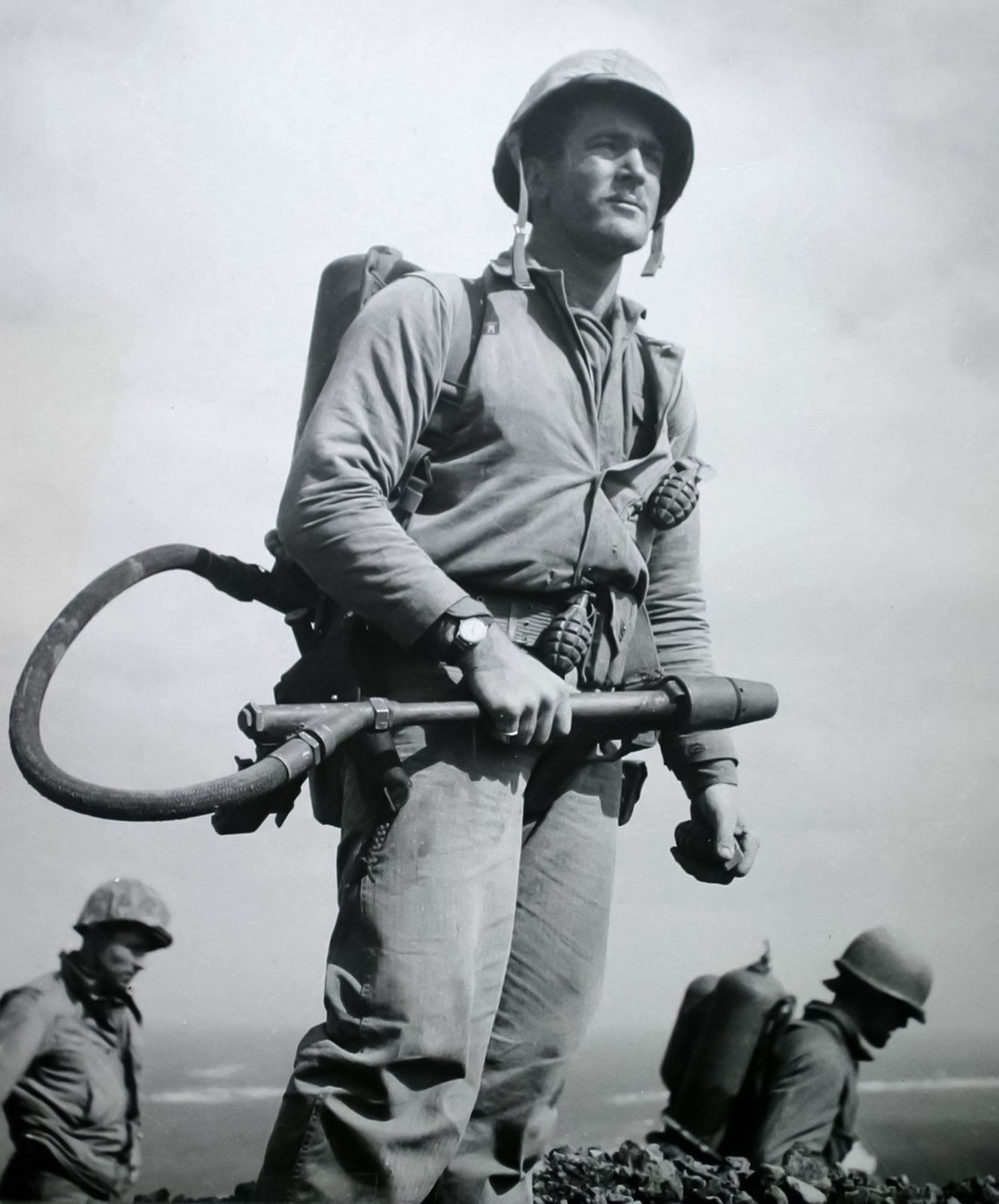
Lindberg is carrying an M2 flamethrower near the summit of Mount Suribachi. Flamethrower operators had one of the most dangerous jobs in the U.S. military. Japanese defenders often fought from heavily fortified bunkers, tunnels, and caves that were difficult to destroy with conventional weapons. Flamethrowers could force defenders out of these positions or destroy them outright, making the weapon a critical tool in the island campaigns of the Pacific.
The Battle of Iwo Jima lasted from February 19 to March 26, 1945. Although Mount Suribachi was secured within the first week, the majority of the fighting occurred in the island’s northern sectors, where thousands of Japanese troops continued resisting from an elaborate underground defense network.
Flamethrower operators faced exceptionally high casualty rates. The fuel tanks they carried made them highly visible targets, and enemy soldiers often prioritized them for elimination. Despite the danger, Marines repeatedly credited flamethrower teams with helping reduce fortified positions that would otherwise have cost many more lives.
Added Fact: The U.S. military used approximately 6,500 flamethrowers in the Pacific Theater during World War II. On Iwo Jima alone, flamethrowers were so effective against cave defenses that some were mounted on specially modified Sherman tanks, known as “Zippo Tanks.” These armored flamethrowers could project burning fuel more than 100 yards and played a major role in overcoming Japan’s underground fortifications.