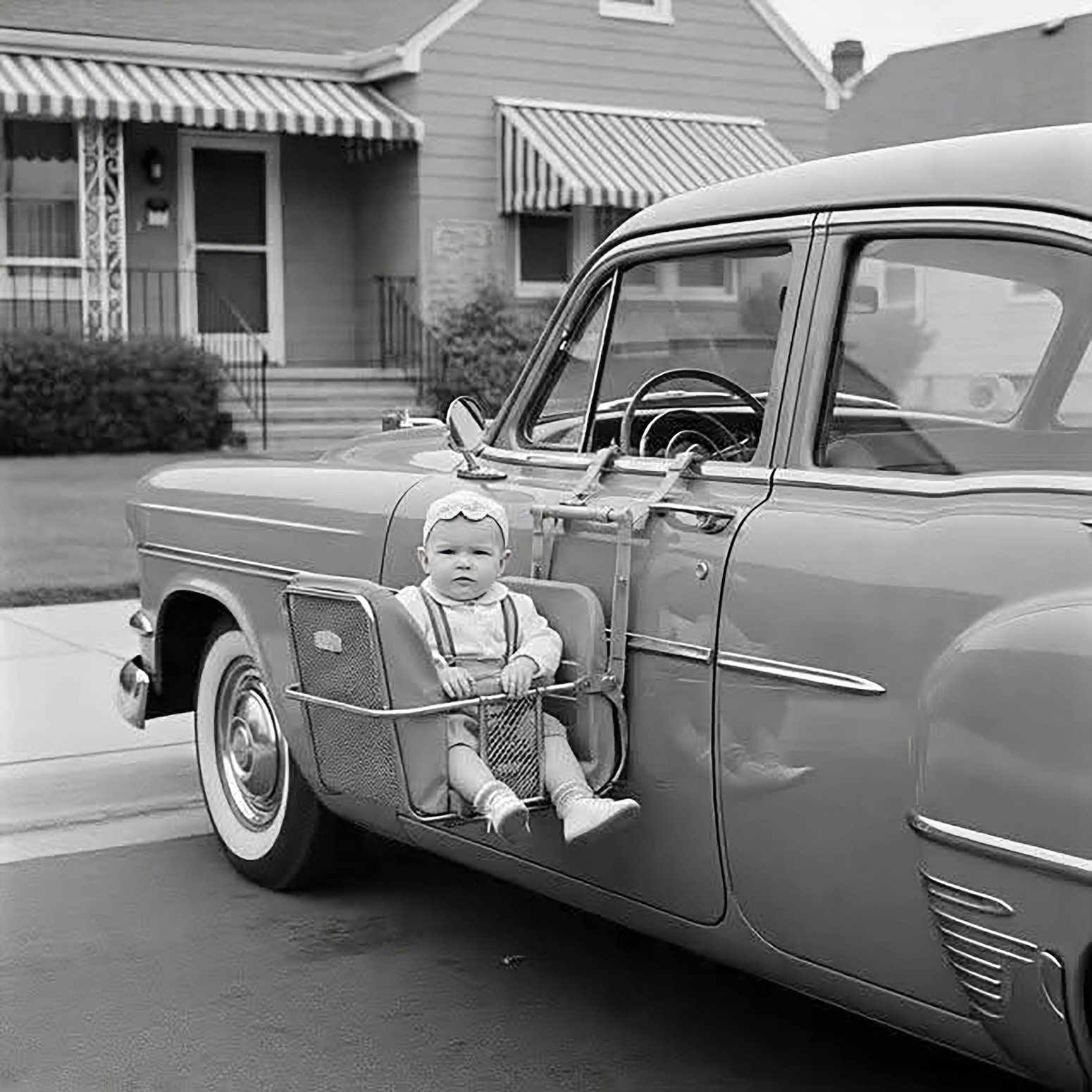
The “car-mounted baby seat” shown here is a good reminder that automotive safety standards were dramatically different in the 1950s. At the time, many parents viewed cars as relatively safe environments, and the primary concern was often keeping children occupied or allowing them a better view of the road rather than protecting them during a collision.
During the 1950s, seat belts were rare in American cars. Most vehicles did not include them as standard equipment, and there were no federal crash-test requirements. Child restraints, when used at all, were often designed to elevate children rather than secure them. Some manufacturers and inventors marketed external or door-mounted seats, believing fresh air and visibility would make travel more enjoyable.
Modern child passenger safety research eventually transformed these practices. The widespread adoption of crash testing, mandatory seat belts, child safety seats, and later airbags contributed to a dramatic reduction in vehicle fatalities. Today, properly installed child restraints are estimated to reduce the risk of fatal injury for infants by more than 70% in passenger vehicles.
Added Fact: The first modern three-point seat belt was developed by Nils Bohlin for Volvo Cars in 1959. Volvo made the patent available to other manufacturers, a decision credited with helping save millions of lives worldwide.