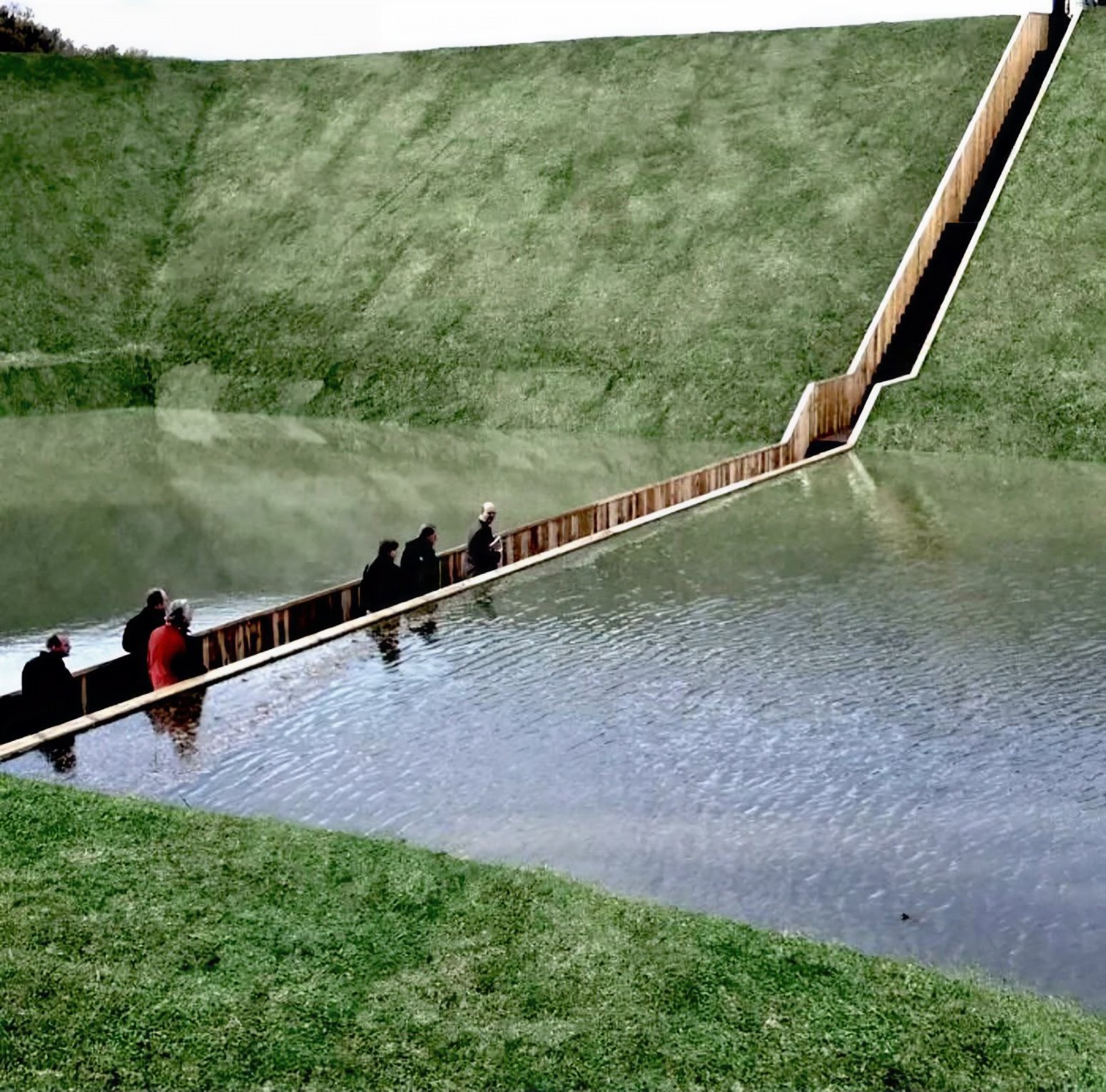
The Moses Bridge is one of the most innovative pieces of modern landscape architecture in the Netherlands. Completed in 2010 near the village of Halsteren, it was designed to provide access to Fort de Roovere, a 17th-century star fort that was part of the Dutch Water Line defense system.
Rather than building a traditional bridge over the moat, architects from the firm RO&AD Architecten chose to create a sunken walkway that cuts through the water. The design gives visitors the impression of walking through the moat itself, which inspired the nickname “Moses Bridge” after the biblical story of Moses parting the sea.
The bridge is constructed primarily from sustainably sourced wood treated to resist water damage. Hidden retaining walls hold back the water on both sides, allowing the path to remain dry while preserving the historic appearance of the fort. The project received international acclaim and won several architectural awards, including recognition from the Dutch Design Awards.
Fort de Roovere was originally built in the 1620s during the Dutch struggle against Spanish rule. It formed part of a defensive network that used controlled flooding to hinder invading armies, a strategy that protected the Netherlands for centuries.
Added Fact: The Dutch perfected “water as a weapon” through systems such as the Dutch Water Line. By flooding land to a depth of only about 12–18 inches (30–45 cm), too deep for soldiers to march through but too shallow for boats, they created vast defensive barriers that proved remarkably effective from the 17th through the 20th centuries.