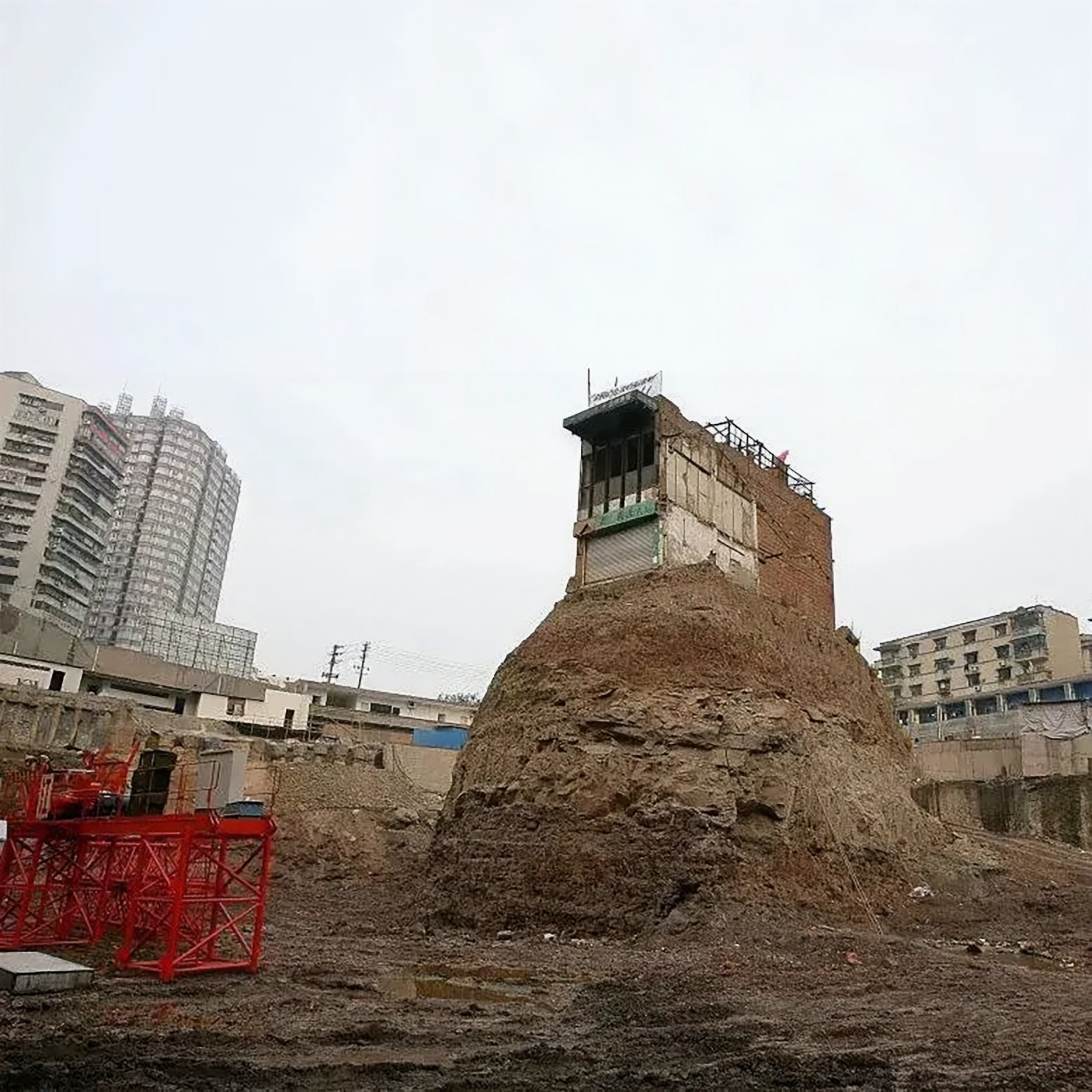
This photograph became one of the most famous examples of a Chinese “nail house”, a term used for property owners who refuse to move despite pressure from developers. The image was taken in 2007 in the city of Chongqing, where homeowner Wu Ping and her husband became national figures after refusing compensation offers to vacate their property.
As excavation proceeded around the site, the house was left perched atop a mound of earth in the middle of a massive construction pit. Utilities were reportedly cut, and access became increasingly difficult, turning the home into a symbol of resistance against powerful development interests.
The dispute attracted enormous media attention throughout China. At the time, China’s rapid urbanization was transforming cities at an unprecedented pace, with millions of residents being relocated for highways, apartment towers, shopping centers, and infrastructure projects. Many citizens saw the case as a test of newly strengthened private property rights.
After weeks of negotiations and national publicity, Wu Ping and her husband eventually reached a settlement with developers and moved out. The house was demolished shortly afterward.
Added Fact: The term “nail house” comes from the idea of a stubborn nail that sticks up and cannot be hammered down. Similar cases have appeared throughout China, sometimes delaying multi-million-dollar construction projects. The Chongqing dispute became so famous that it was discussed internationally and is often cited as a landmark moment in China’s evolving debate over private property rights and urban redevelopment.