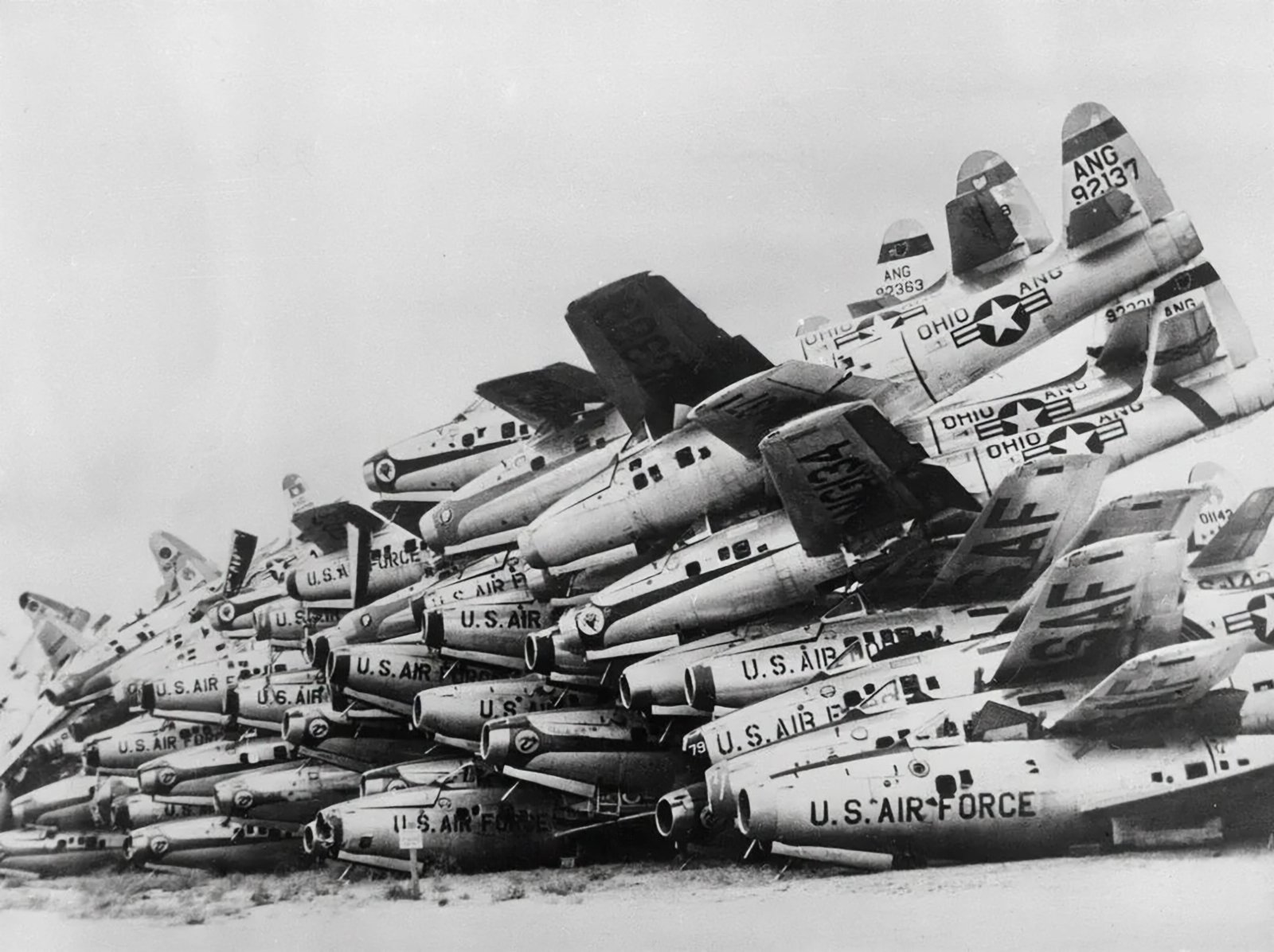
During the Cold War, the United States maintained thousands of military aircraft in active service and reserve fleets. As newer jet aircraft entered service in the 1950s and 1960s, large numbers of older planes were retired and sent to aircraft storage and reclamation facilities, commonly known as “boneyards.” The largest of these facilities was Davis-Monthan Air Force Base in Arizona, whose dry climate and hard soil made it ideal for long-term aircraft preservation.
Aircraft stored in these boneyards were not always destined for the scrapyard. Many were maintained in reserve status, cannibalized for spare parts, converted for other uses, or reactivated during military emergencies. During the Vietnam War, for example, dozens of aircraft previously placed in storage were returned to operational service.
By the mid-1960s, the U.S. Air Force inventory still exceeded 15,000 aircraft, reflecting the enormous military buildup of the post-World War II and early Cold War eras.
Added Fact: During the Korean War, the U.S. military reactivated more than 1,000 aircraft from storage. Even today, the 309th Aerospace Maintenance and Regeneration Group at Davis-Monthan maintains over 4,000 retired military aircraft and remains the largest aircraft storage facility in the world.