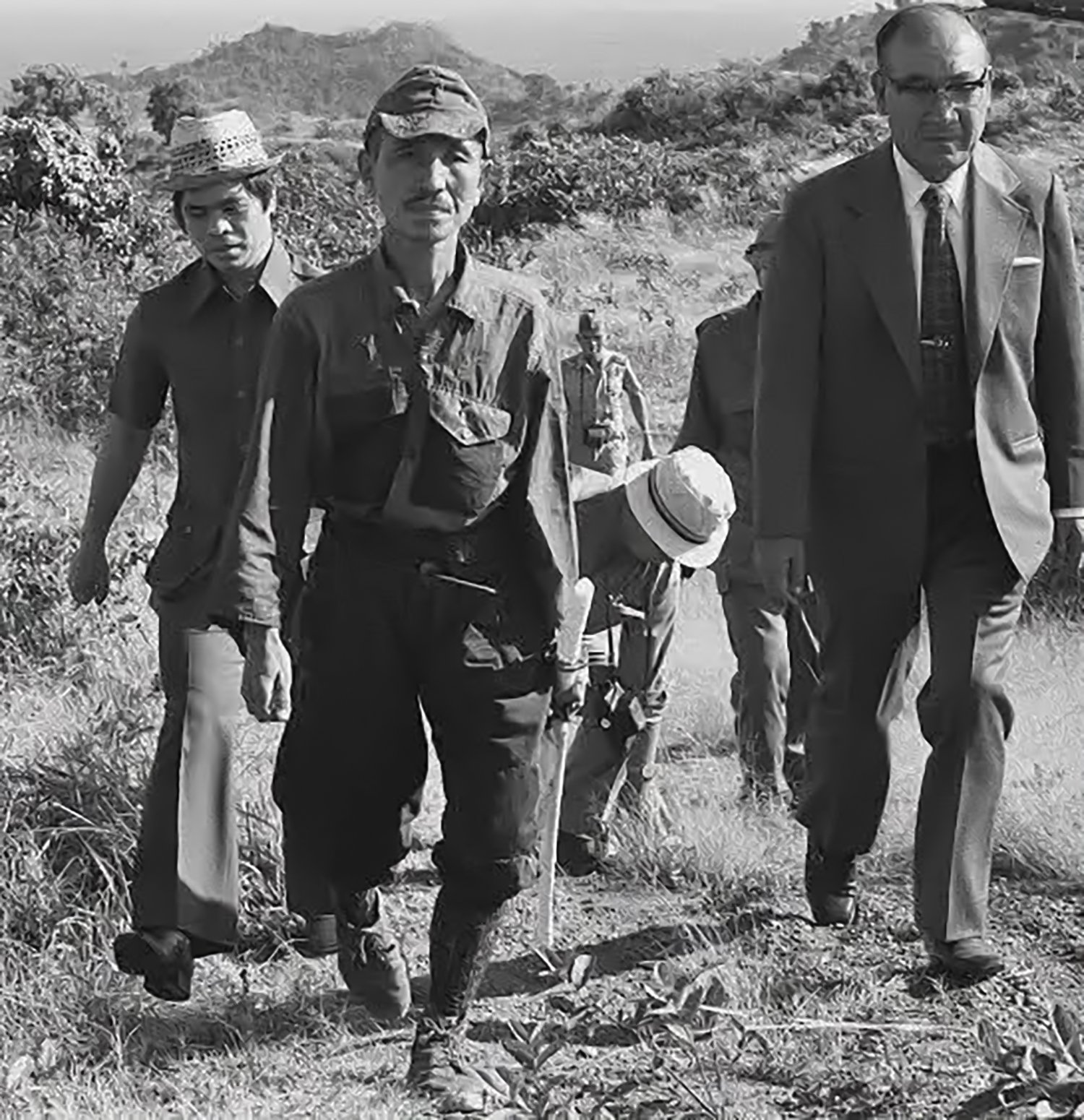
Hiroo Onoda became one of the most famous “holdouts” of World War II, and his story is even more remarkable than the caption suggests.
Onoda was a second lieutenant in the Imperial Japanese Army who was sent to Lubang Island in the Philippines in December 1944. Before leaving, he received orders not to surrender and not to take his own life. When Japan surrendered in August 1945, leaflets announcing the end of the war were dropped on the island, but Onoda and a handful of other soldiers believed they were Allied propaganda.
For years, the group survived by living in the jungle, stealing food, and occasionally exchanging fire with local authorities. One by one, the other holdouts died or surrendered, leaving Onoda alone by 1972.
In 1974, a Japanese adventurer named Norio Suzuki tracked him down and befriended him. However, Onoda insisted he would only surrender if ordered to do so by a superior officer. The Japanese government located his former commander, Yoshimi Taniguchi, who flew to Lubang and formally relieved him of duty on March 9, 1974.
Onoda emerged from the jungle still wearing much of his uniform and carrying his rifle, ammunition, sword, and other equipment. Remarkably, his Arisaka rifle was still operational after nearly three decades.
Added Fact: During his 29 years on Lubang, Onoda and his companions conducted guerrilla activities that resulted in the deaths of around 30 Filipino civilians and police officers and wounded many others. While many in Japan viewed him as a symbol of loyalty and perseverance, his legacy remains more complicated in the Philippines, where memories of those incidents endured long after his surrender.