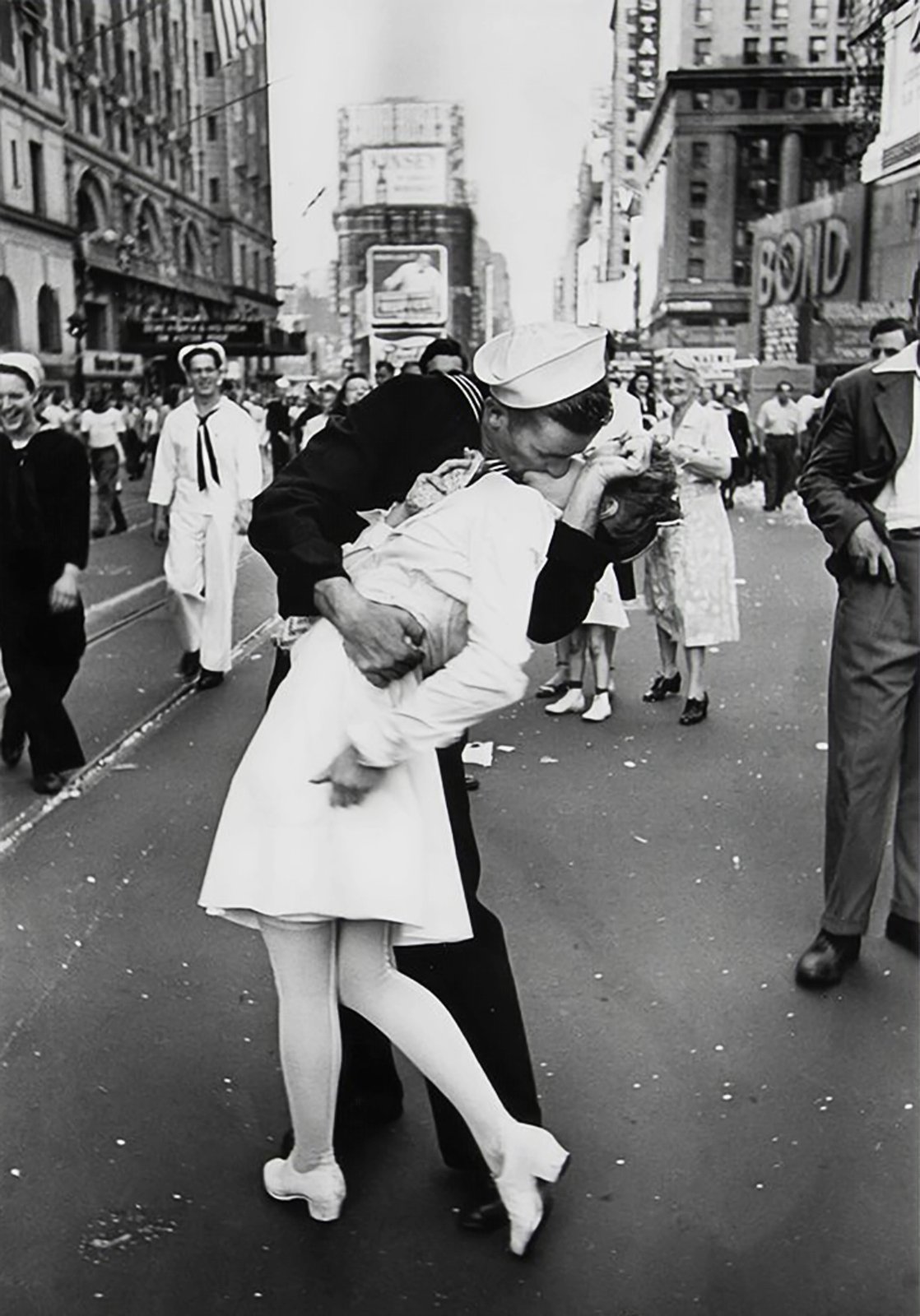
Portraying a U.S. Navy sailor kissing a stranger on Victory over Japan Day (V-J Day) in Times Square at the end of World War II, Alfred Eisenstaedt’s photo has become one of the most recognisable and imitated photos of the 20th century. The couple in the photo remained anonymous for years, before a 2016 book revealed them to be George Mendonsa and Greta Zimmer Friedman.
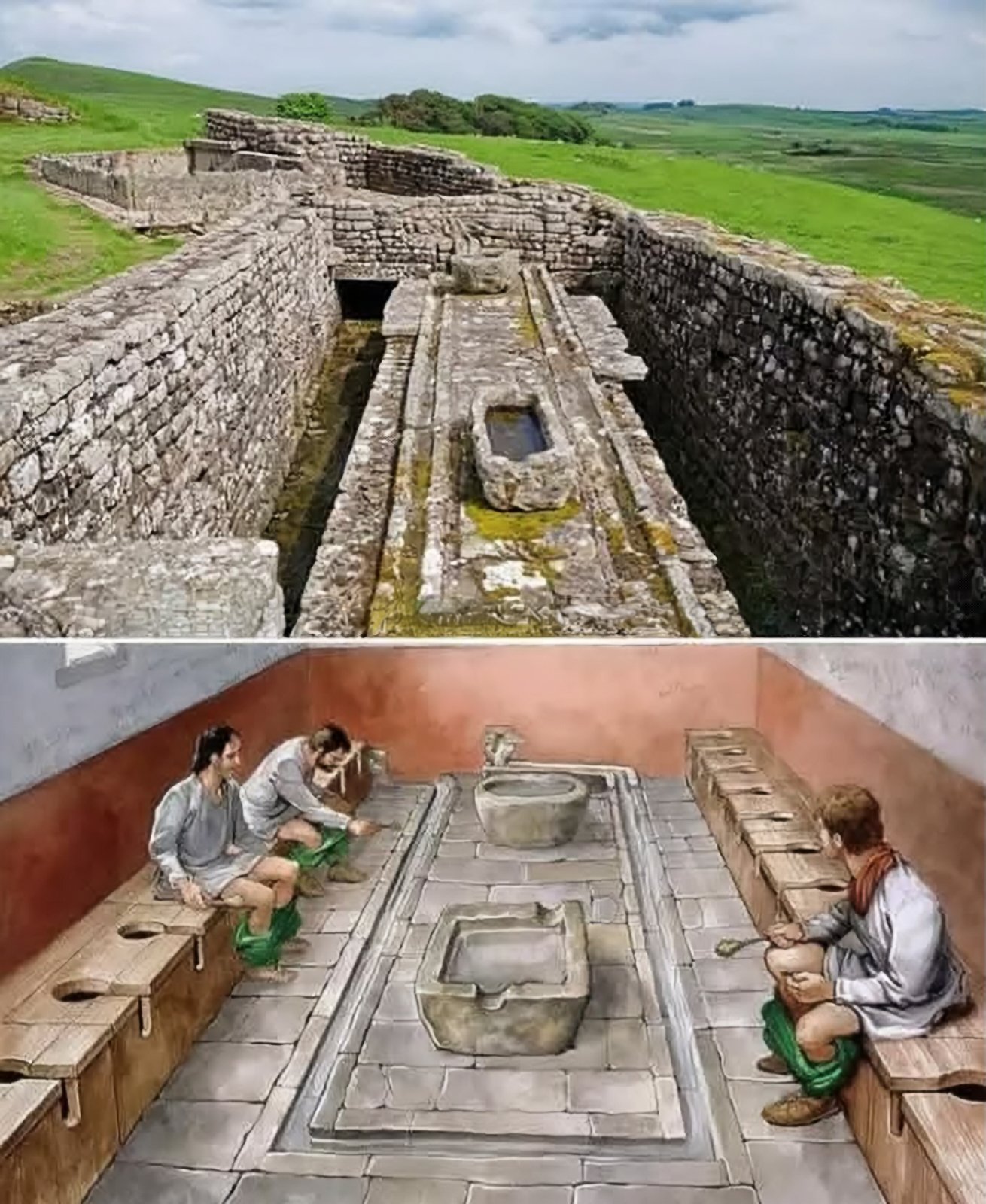
Inside Roman forts in Britain, communal latrines were built with stone benches lined with keyhole-shaped openings. Beneath them ran a constant flow of water to carry waste away, often connected to larger drainage systems. Many forts along Hadrian’s Wall included these facilities, showing how standardized Roman engineering was, even in remote provinces.There were no partitions. Using the latrine was a social activity. Instead of toilet paper, Romans used a shared sponge on a stick, called a tersorium, rinsed in running water between uses.Roman military forts housed anywhere from 500 to 1,000 soldiers, and maintaining hygiene was crucial to preventing disease in close quarters. Added fact: Rome’s sewer system, including the famous Cloaca Maxima, dates back to at least the 6th century BC.
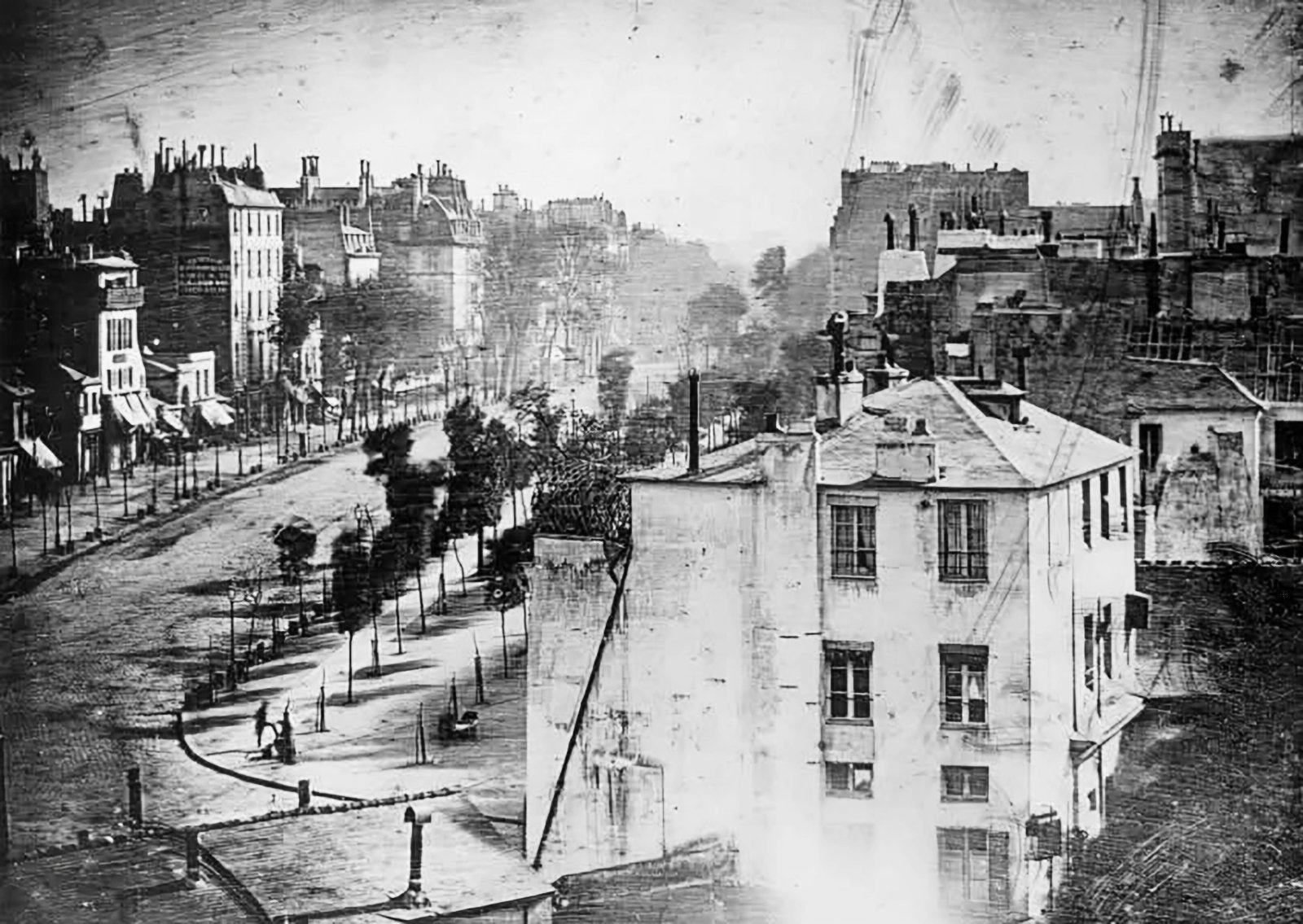
No people were captured because the exposure was 5-10 mins so all the people and traffic got fused and disappeared into the backdrop. Except one man that have a shoes cleaned on bottom left corner.The image is widely attributed to Louis Daguerre, who developed the daguerreotype process, the first commercially viable form of photography.
Daguerre exposed a polished silver-coated copper plate from his studio window overlooking the Boulevard du Temple, a busy thoroughfare at the time. Early photographic chemistry required long exposure times, typically 5 to 10 minutes, because the light sensitivity of the materials was extremely low. During that interval, moving elements, carriages, pedestrians, animals, did not register clearly on the plate. They passed through the frame too quickly, effectively erasing themselves from the final image.
One figure remains visible: a man standing still long enough to be captured while having his shoes polished. The bootblack and customer stayed in place for several minutes, allowing their outlines to be recorded, making them among the first humans ever photographed. Added fact: Daguerre announced his process in 1839, and the French government acquired the rights and released it “free to the world,” accelerating the global spread of photography within just a few years.
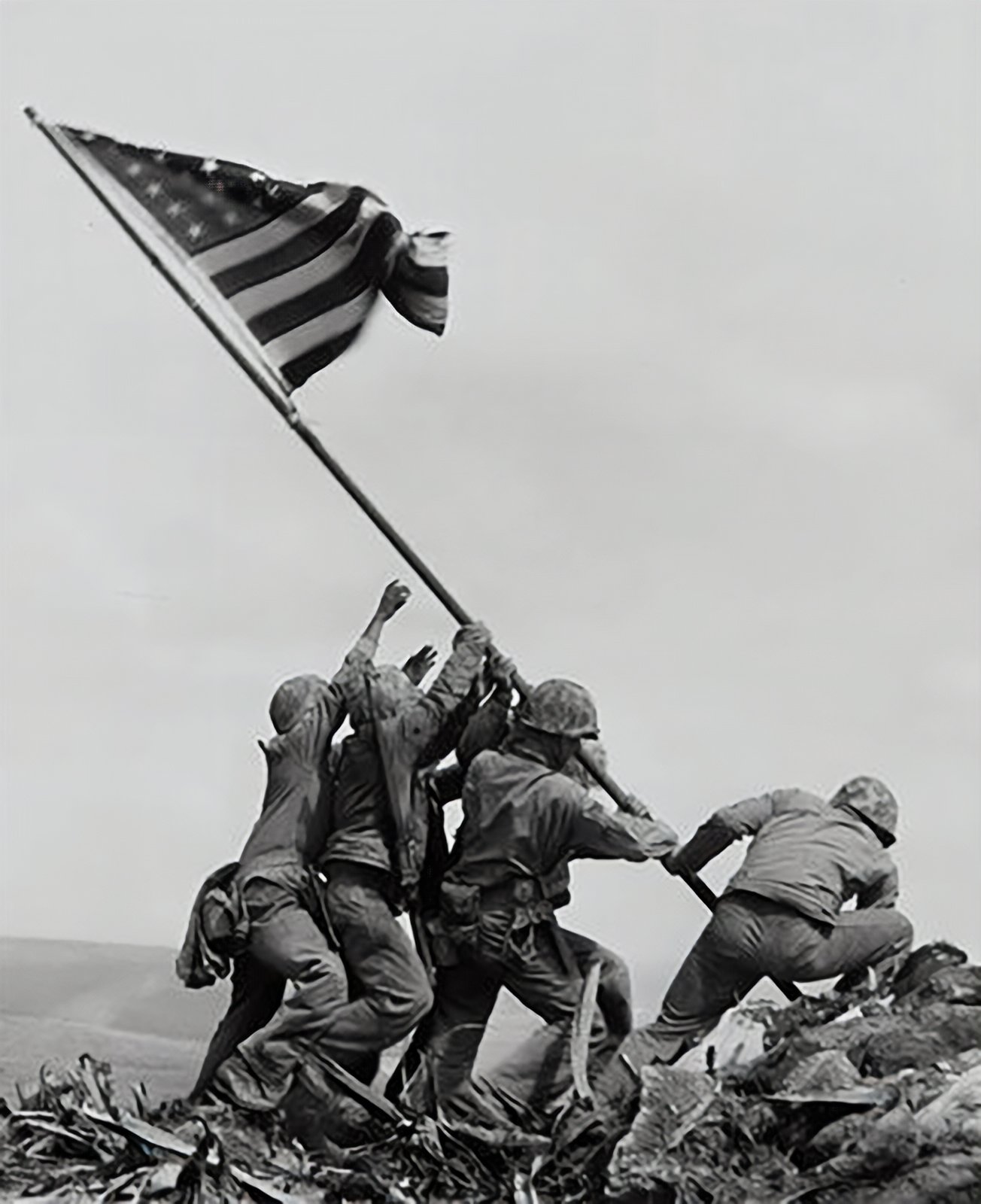
More than a symbolic flag raising during World War II, Joe Rosenthal’s 1945 photo transcended its time and location to become a symbol of national pride and unity in the war years. Today the image has been immortalized in a statue at the United States Marine Corps War Memorial in Arlington, Virginia.
After studying drama, she began her film career in 1989, and has appeared in more than 60 films. She won the César Award for Best Supporting Actress for I’ve Loved You So Long (2008).
She made her acting debut as Sansa Stark in the television series Game of Thrones (2011–2019), for which she received an Emmy Award nomination for Outstanding Supporting Actress in 2019.
Cox appeared on the cover of Harper’s Bazaar Australia, as well as an eight-page spread in the magazine. Her other prizes included a modelling contract with Chic Model Management.