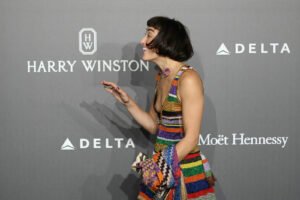
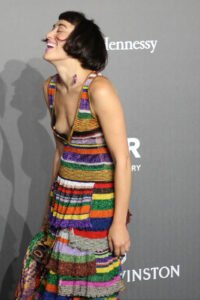
Mia Moretti
American DJ.
Starting her career playing vinyl records on Los Angeles’ legendary Sunset Strip, Moretti developed a keen sonic curiosity.

Hier vind je allerlei foto's die ik in de loop der jaren heb gemaakt of verzameld
Mia Moretti
American DJ.
Starting her career playing vinyl records on Los Angeles’ legendary Sunset Strip, Moretti developed a keen sonic curiosity.


Anna Friel
English actress.
In 2017, she won the International Emmy Award for Best Actress for her portrayal of the title character in the detective drama series Marcella (2016–2021).
https://en.wikipedia.org/wiki/Anna_Friel
The Only Film Footage of Anne Frank was from July 22, 1941, when a neighbor filmed a wedding outside, capturing Anne leaning out of a second-floor window at Merwedeplein 37 to look at the bride.
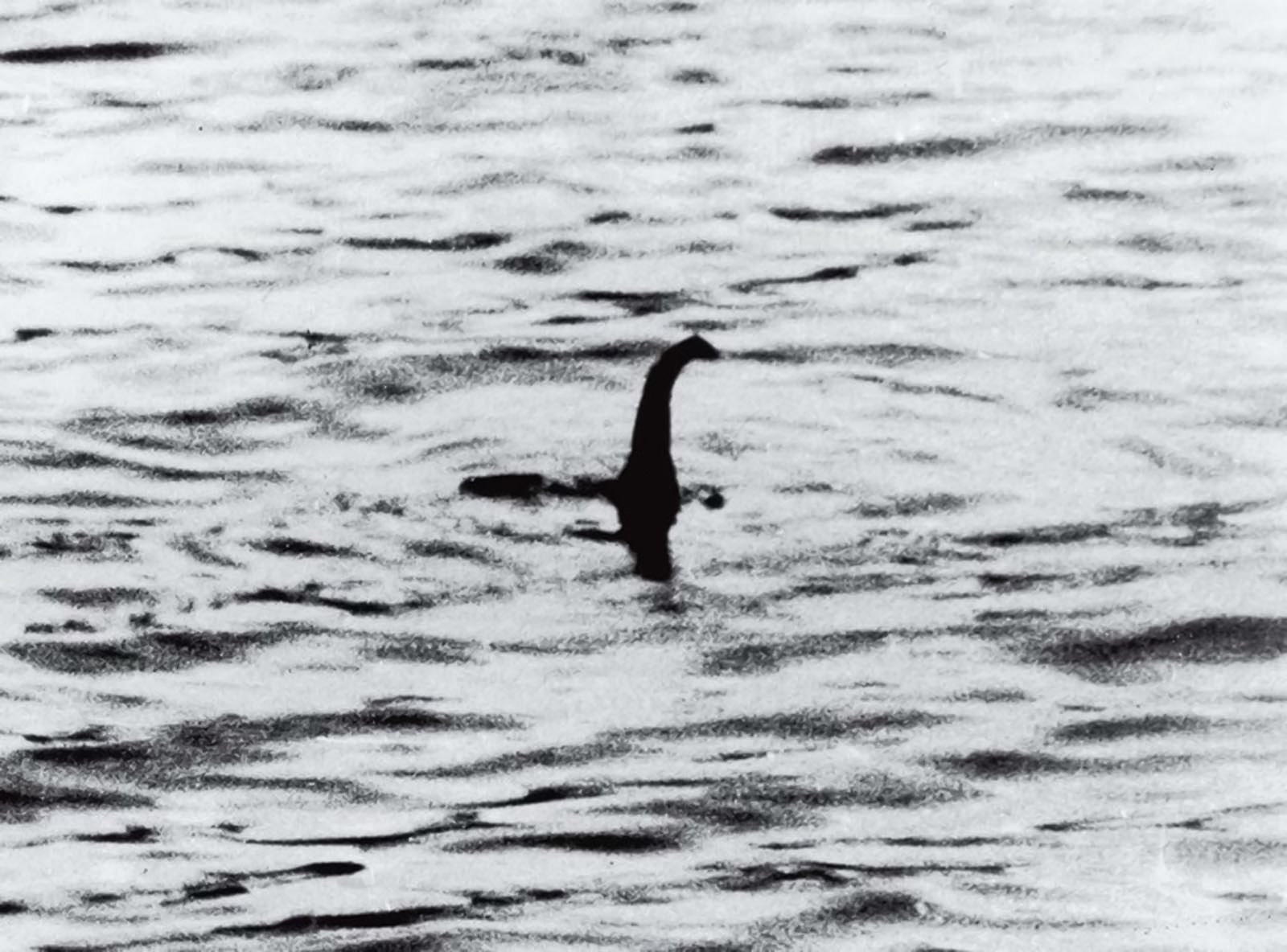
If the giraffe never existed, we’d have to invent it. It’s our nature to grow bored with the improbable but real and look for the impossible. So it is with the photo of what was said to be the Loch Ness monster, purportedly taken by British doctor Robert Wilson in April 1934.
Wilson, however, had simply been enlisted to cover up an earlier fraud by wild-game hunter Marmaduke Wetherell, who had been sent to Scotland by London’s Daily Mail to bag the monster.
There being no monster to bag, Wetherell brought home photos of hippo prints that he said belonged to Nessie.
The Mail caught wise and discredited Wetherell, who then returned to the loch with a monster made out of a toy submarine. He and his son used Wilson, a respected physician, to lend the hoax credibility.
The Mail endures; Wilson’s reputation doesn’t. The Loch Ness image is something of a lodestone for conspiracy theorists and fable seekers, as is the absolutely authentic picture of the famous face on Mars taken by the Viking probe in 1976.
The thrill of that find lasted only until 1998, when the Mars Global Surveyor proved the face was, as NASA said, a topographic formation, one that by that time had been nearly windblown away. We were innocents in those sweet, pre-Photoshop days.
Now we know better—and we trust nothing. The art of the fake has advanced, but the charm of it, like the Martian face, is all but gone.
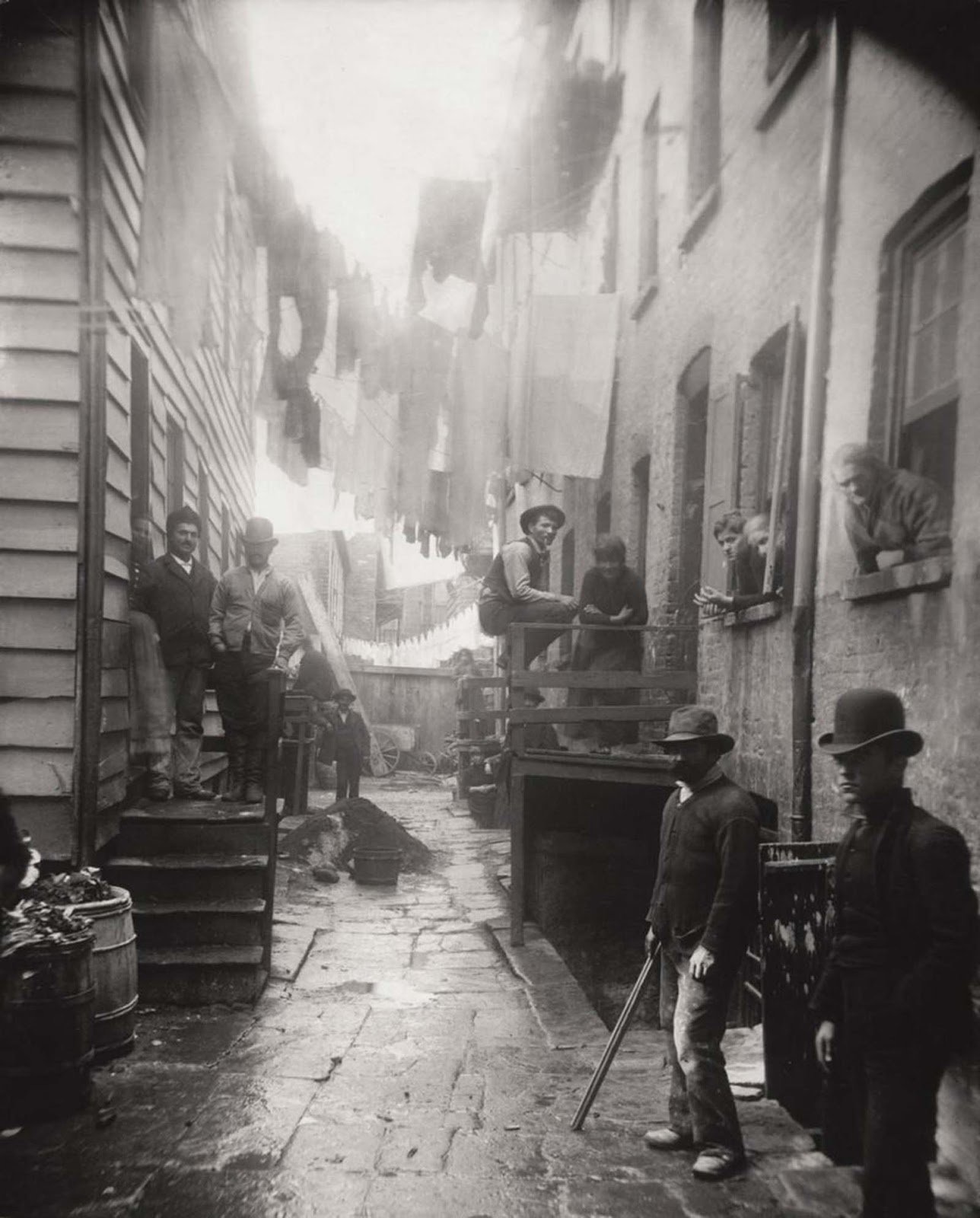
Late 19th-century New York City was a magnet for the world’s immigrants, and the vast majority of them found not streets paved with gold but nearly subhuman squalor.
While polite society turned a blind eye, brave reporters like the Danish-born Jacob Riis documented this shame of the Gilded Age.
Riis did this by venturing into the city’s most ominous neighborhoods with his blinding magnesium flash powder lights, capturing the casual crime, grinding poverty and frightful overcrowding.
Most famous of these was Riis’ image of a Lower East Side street gang, which conveys the danger that lurked around every bend.
Such work became the basis of his revelatory book How the Other Half Lives, which forced Americans to confront what they had long ignored and galvanized reformers like the young New York politician Theodore Roosevelt, who wrote to the photographer, “I have read your book, and I have come to help.”
Riis’ work was instrumental in bringing about New York State’s landmark Tenement House Act of 1901, which improved conditions for the poor. And his crusading approach and direct, confrontational style ushered in the age of documentary and muckraking photojournalism.
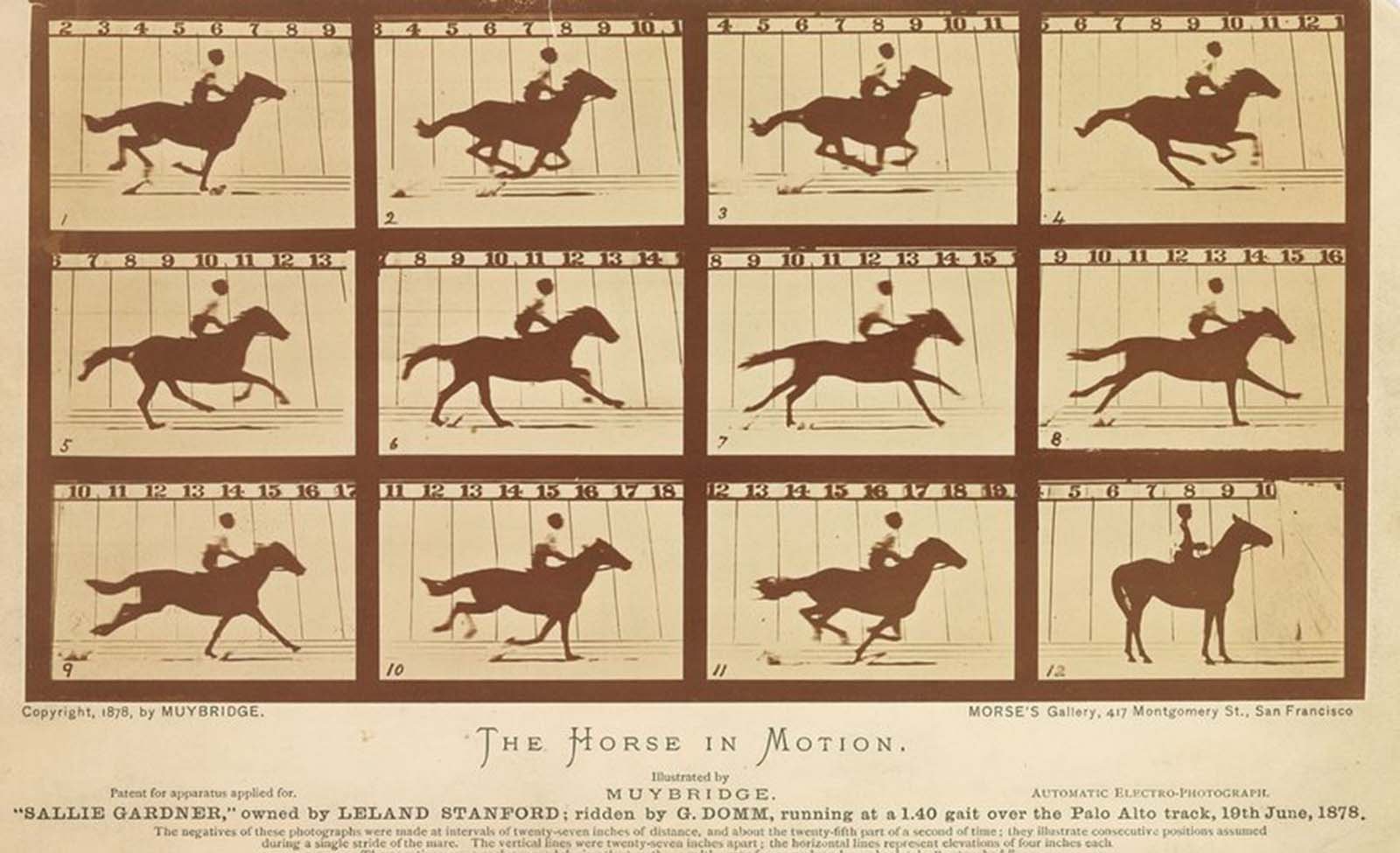
When a horse trots or gallops, does it ever become fully airborne? This was the question photographer Eadweard Muybridge set out to answer in 1878. Railroad tycoon and former California governor Leland Stanford was convinced the answer was yes and commissioned Muybridge to provide proof.
Muybridge developed a way to take photos with an exposure lasting a fraction of a second and, with reporters as witnesses, arranged 12 cameras along a track on Stanford’s estate.
As a horse sped by, it tripped wires connected to the cameras, which took 12 photos in rapid succession. Muybridge developed the images on site and, in the frames, revealed that a horse is completely aloft with its hooves tucked underneath it for a brief moment during a stride.
The revelation, imperceptible to the naked eye but apparent through photography, marked a new purpose for the medium. It could capture truth through technology. Muybridge’s stop-motion technique was an early form of animation that helped pave the way for the motion-picture industry, born a short decade later.
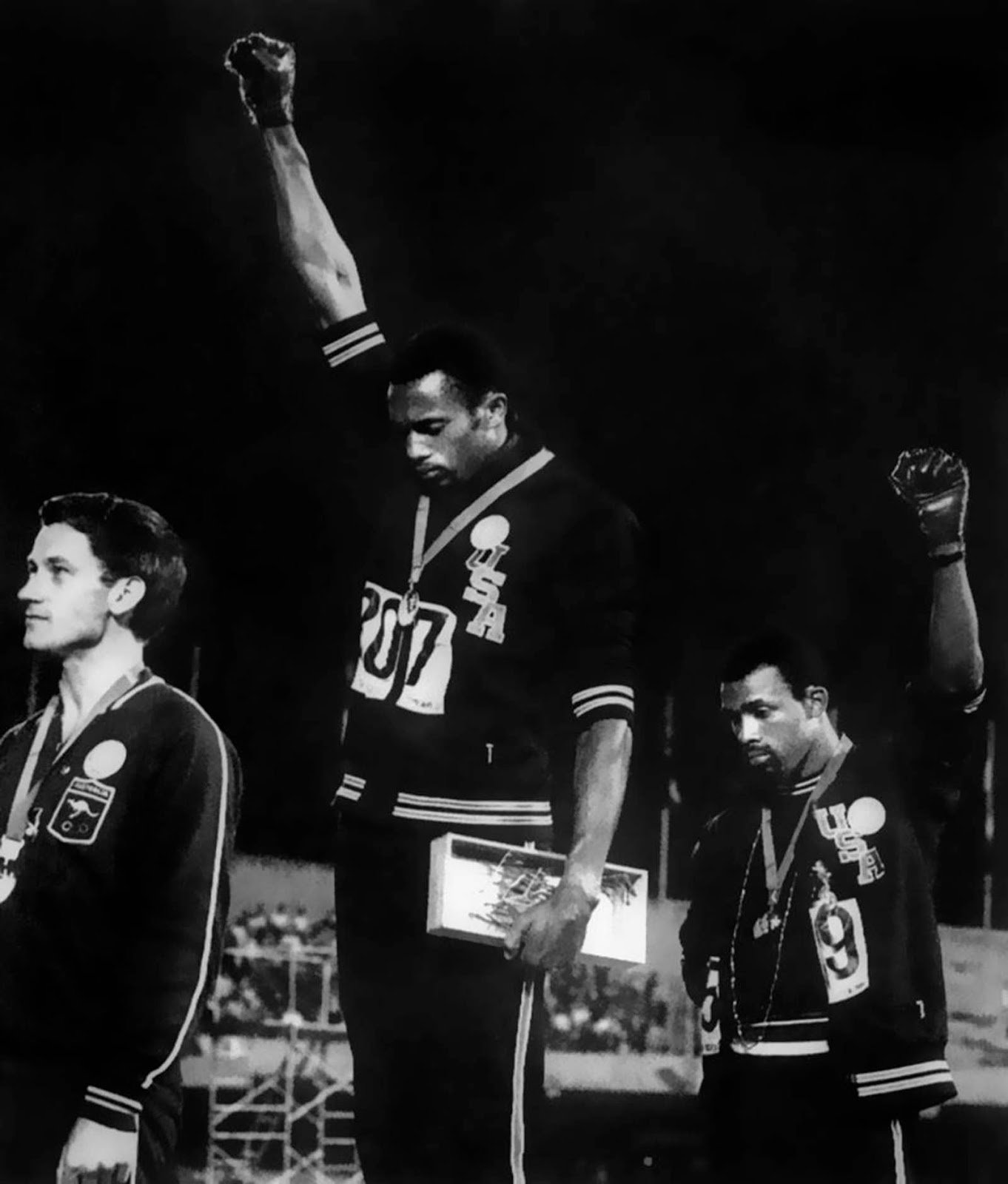
The Olympics are intended to be a celebration of global unity. But when the American sprinters Tommie Smith and John Carlos ascended the medal stand at the 1968 Games in Mexico City, they were determined to shatter the illusion that all was right in the world.
Just before “The Star-Spangled Banner” began to play, Smith, the gold medalist, and Carlos, the bronze winner, bowed their heads and raised black-gloved fists in the air.
Their message could not have been clearer: Before we salute America, America must treat blacks as equal. “We knew that what we were going to do was far greater than any athletic feat,” Carlos later said.
John Dominis, a quick-fingered life photographer known for capturing unexpected moments, shot a close-up that revealed another layer: Smith in black socks, his running shoes off, in a gesture meant to symbolize black poverty. Published in life, Dominis’ image turned the somber protest into an iconic emblem of the turbulent 1960s.
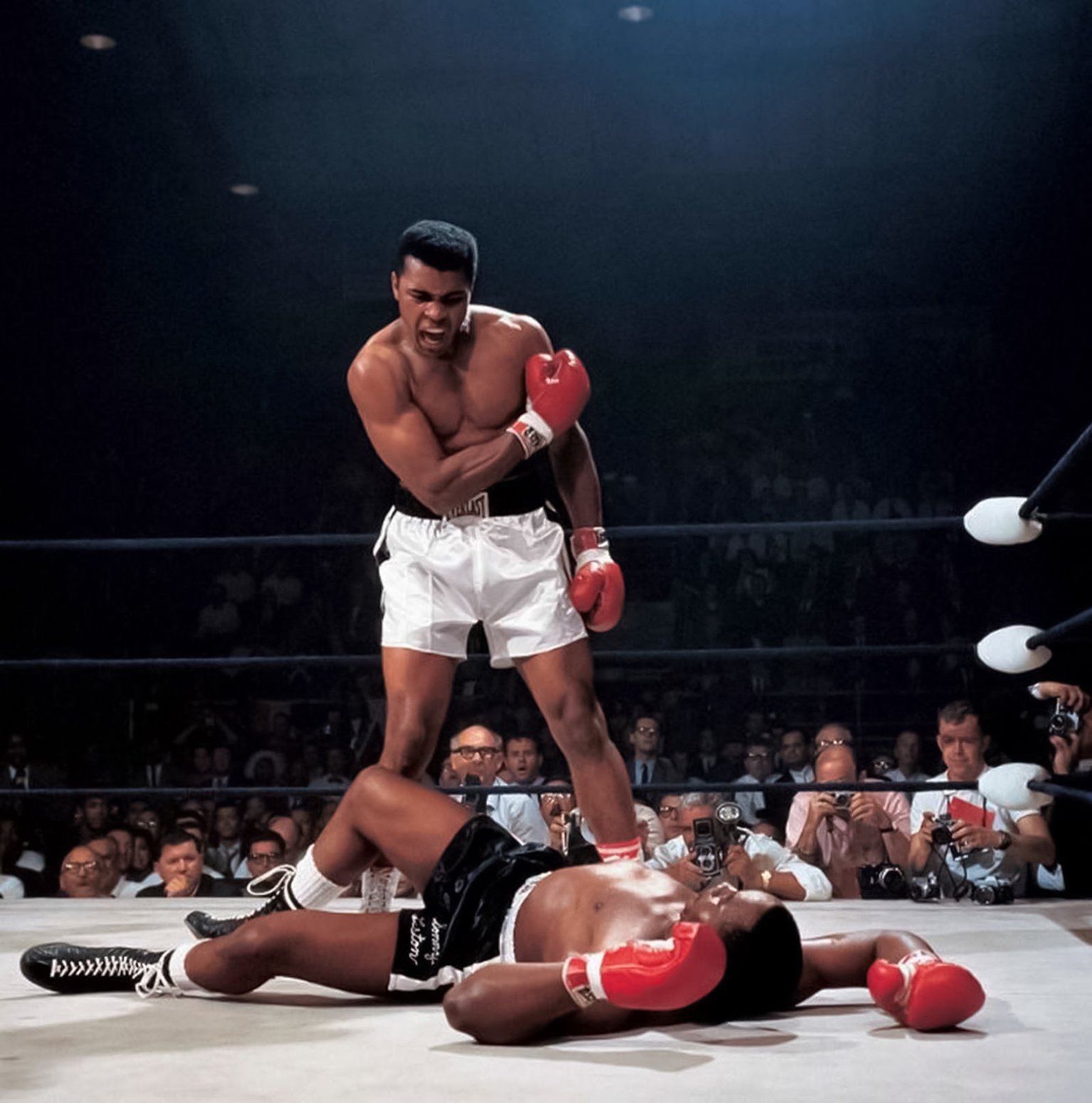
So much of great photography is being in the right spot at the right moment. That was what it was like for sports illustrated photographer Neil Leifer when he shot perhaps the greatest sports photo of the century. “I was obviously in the right seat, but what matters is I didn’t miss,” he later said.
Leifer had taken that ringside spot in Lewiston, Maine, on May 25, 1965, as 23-year-old heavyweight boxing champion Muhammad Ali squared off against 34-year-old Sonny Liston, the man he’d snatched the title from the previous year. One minute and 44 seconds into the first round, Ali’s right fist connected with Liston’s chin and Liston went down.
Leifer snapped the photo of the champ towering over his vanquished opponent and taunting him, “Get up and fight, sucker!” Powerful overhead lights and thick clouds of cigar smoke had turned the ring into the perfect studio, and Leifer took full advantage.
His perfectly composed image captures Ali radiating the strength and poetic brashness that made him the nation’s most beloved and reviled athlete, at a moment when sports, politics and popular culture were being squarely battered in the tumult of the ’60s.
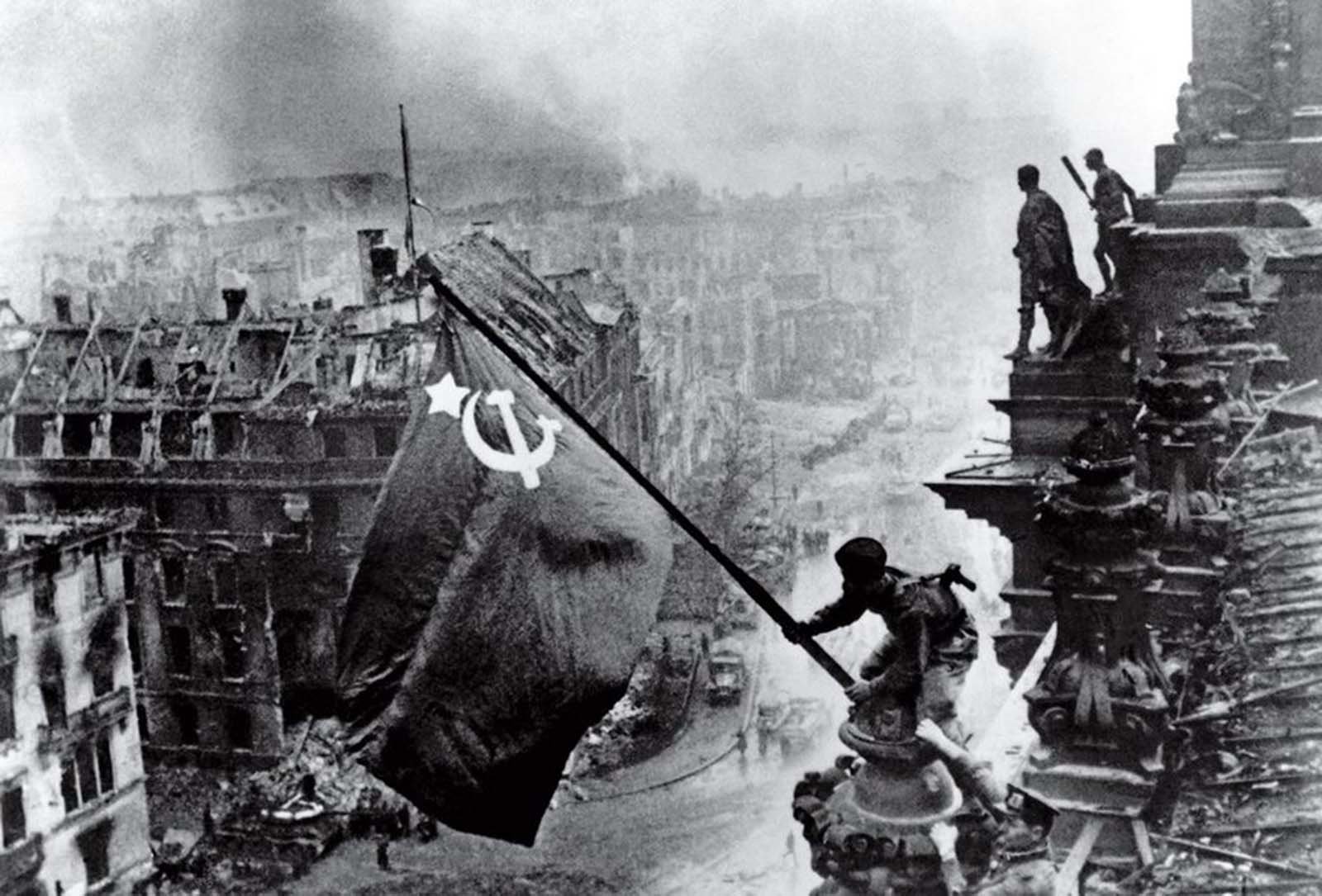
“This is what I was waiting for 1,400 days,” the Ukrainian-born Yevgeny Khaldei said as he gazed at the ruins of Berlin on May 2, 1945.
After four years of fighting and photographing across Eastern Europe, the Red Army soldier arrived in the heart of the Nazis’ homeland armed with his Leica III rangefinder and a massive Soviet flag that his uncle, a tailor, had fashioned for him from three red tablecloths.
Adolf Hitler had committed suicide two days before, yet the war still raged as Khaldei made his way to the Reichstag.
There he told three soldiers to join him, and they clambered up broken stairs onto the parliament building’s blood-soaked parapet. Gazing through his camera, Khaldei knew he had the shot he had hoped for: “I was euphoric.”
In printing, Khaldei dramatized the image by intensifying the smoke and darkening the sky—even scratching out part of the negative—to craft a romanticized scene that was part reality, part artifice, and all patriotism. Published in the Russian magazine Ogonek, the image became an instant propaganda icon.
And no wonder. The flag jutting from the heart of the enemy exalted the nobility of communism proclaimed the Soviets the new overlords and hinted that by lowering the curtain of war, Premier Joseph Stalin would soon hoist a cold new iron one across the land.
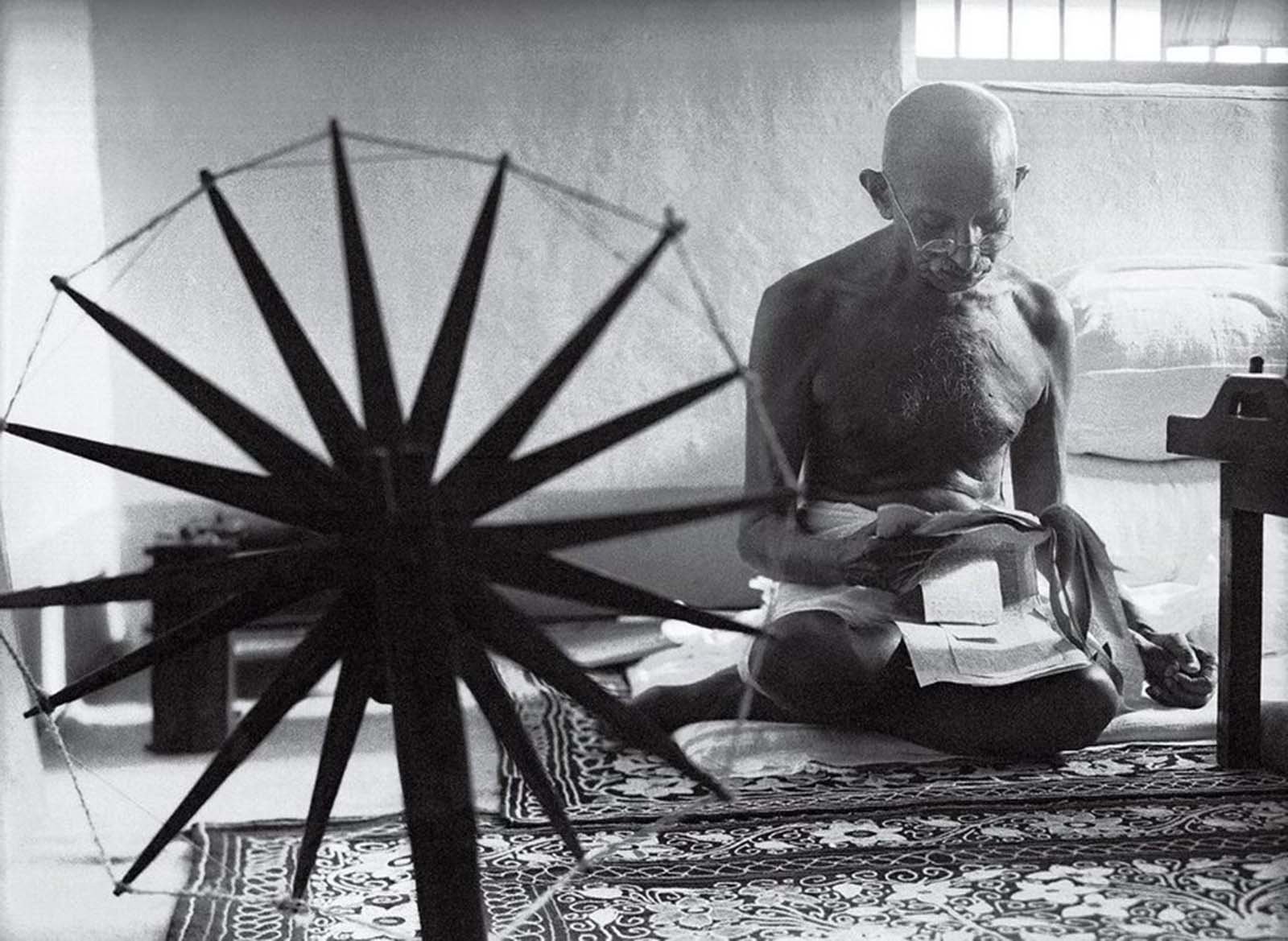
When the British held Mohandas Gandhi prisoner at Yeravda prison in Pune, India, from 1932 to 1933, the nationalist leader made his own thread with a charkha, a portable spinning wheel.
The practice evolved from a source of personal comfort during captivity into a touchstone of the campaign for independence, with Gandhi encouraging his countrymen to make their own homespun cloth instead of buying British goods.
By the time Margaret Bourke-White came to Gandhi’s compound for a life article on India’s leaders, spinning was so bound up with Gandhi’s identity that his secretary, Pyarelal Nayyar, told Bourke-White that she had to learn the craft before photographing the leader.
Bourke-White’s picture of Gandhi reading the news alongside his charkha never appeared in the article for which it was taken, but less than two years later life featured the photo prominently in a tribute published after Gandhi’s assassination.
It soon became an indelible image, the slain civil-disobedience crusader with his most potent symbol, and helped solidify the perception of Gandhi outside the subcontinent as a saintly man of peace.
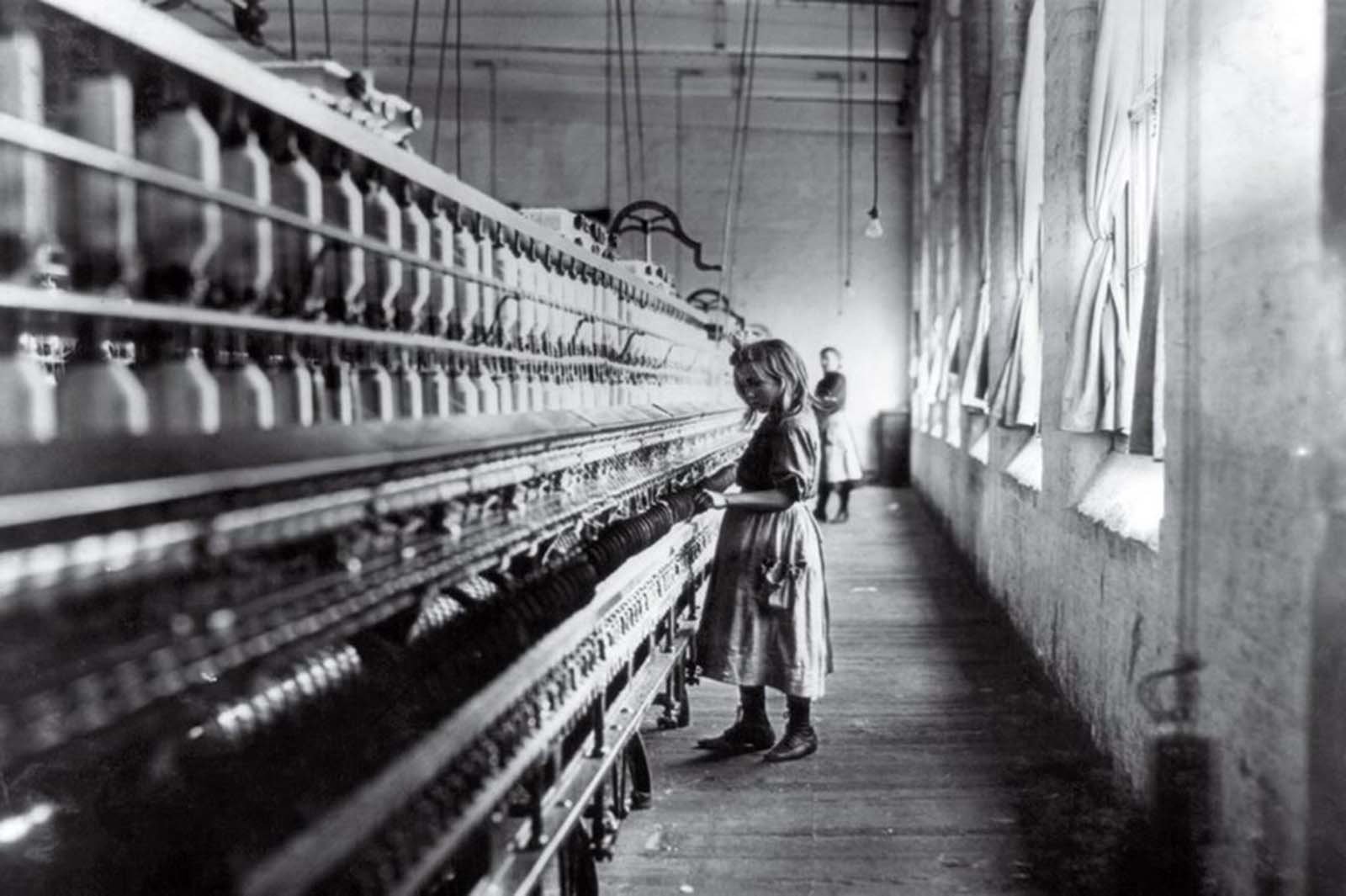
Working as an investigative photographer for the National Child Labor Committee, Lewis Hine believed that images of child labor would force citizens to demand change.
The muckraker conned his way into mills and factories from Massachusetts to South Carolina by posing as a Bible seller, insurance agent, or industrial photographer in order to tell the plight of nearly 2 million children.
Carting around a large-format camera and jotting down information in a hidden notebook, Hine recorded children laboring in meatpacking houses, coal mines, and canneries, and in November 1908 he came upon Sadie Pfeifer, who embodied the world he exposed.
A 48-inch-tall wisp of a girl, she was “one of the many small children at work” manning a gargantuan cotton-spinning machine in Lancaster, S.C. Since Hine often had to lie to get his shots, he made “double-sure that my photo data was 100% pure—no retouching or fakery of any kind.”
His images of children as young as 8 dwarfed by the cogs of a cold, mechanized universe squarely set the horrors of child labor before the public, leading to regulatory legislation and cutting the number of child laborers nearly in half from 1910 to 1920.
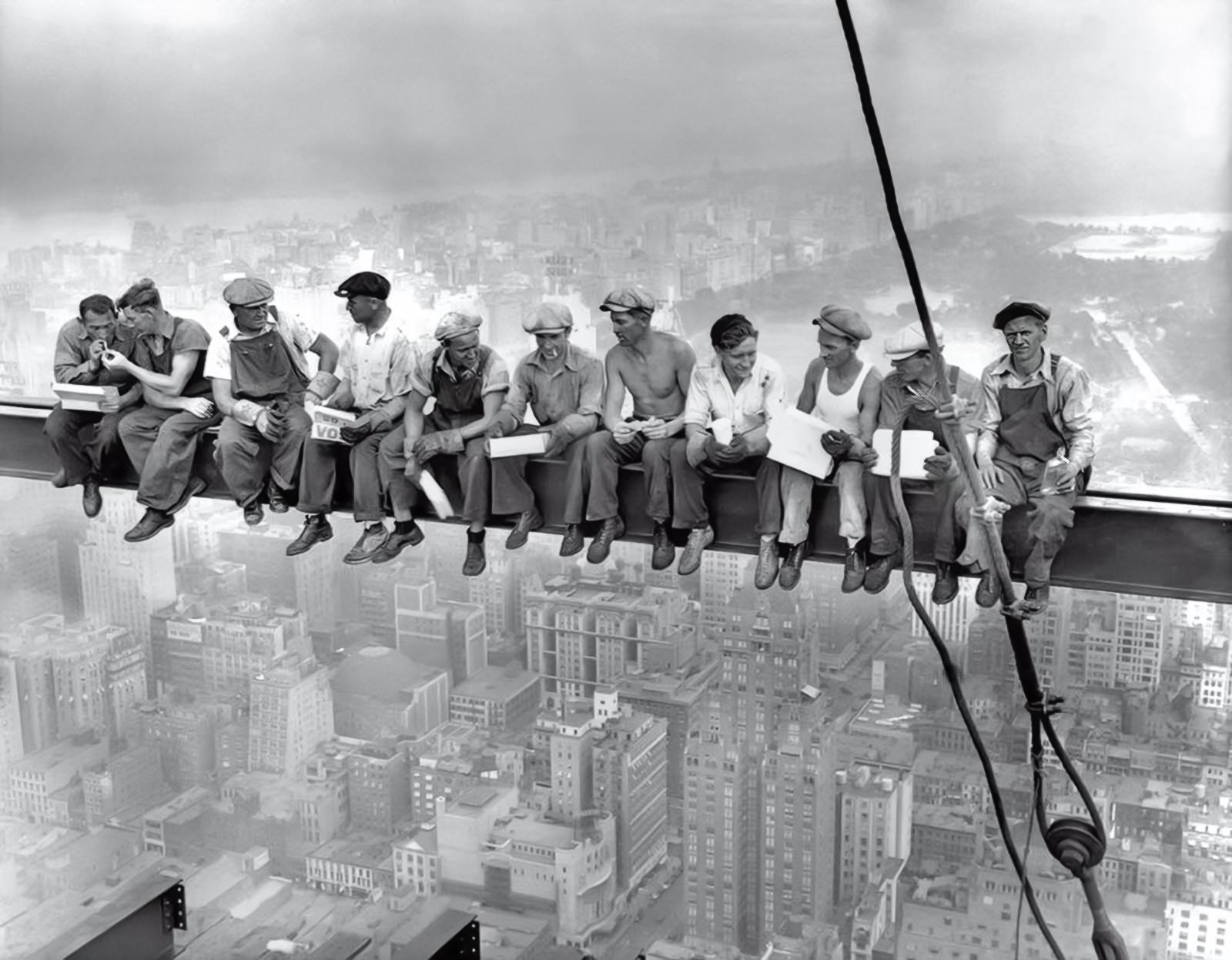
It’s the most perilous yet playful lunch break ever captured: 11 men casually eating, chatting and sneaking a smoke as if they weren’t 840 feet above Manhattan with nothing but a thin beam keeping them aloft. That comfort is real; the men are among the construction workers who helped build Rockefeller Center.
But the picture, taken on the 69th floor of the flagship RCA Building (now the GE Building), was staged as part of a promotional campaign for the massive skyscraper complex.
While the photographer and the identities of most of the subjects remain a mystery—the photographers Charles C. Ebbets, Thomas Kelley and William Leftwich were all present that day, and it’s not known which one took it—there isn’t an ironworker in New York City who doesn’t see the picture as a badge of their bold tribe. In that way, they are not alone.
By thumbing its nose at both danger and the Depression, Lunch Atop a Skyscraper came to symbolize American resilience and ambition at a time when both were desperately needed.
It has since become an iconic emblem of the city in which it was taken, affirming the romantic belief that New York is a place unafraid to tackle projects that would cow less brazen cities.
And like all symbols in a city built on hustle, Lunch Atop a Skyscraper has spawned its own economy. It is the Corbis photo agency’s most reproduced image. And good luck walking through Times Square without someone hawking it on a mug, magnet or T-shirt.
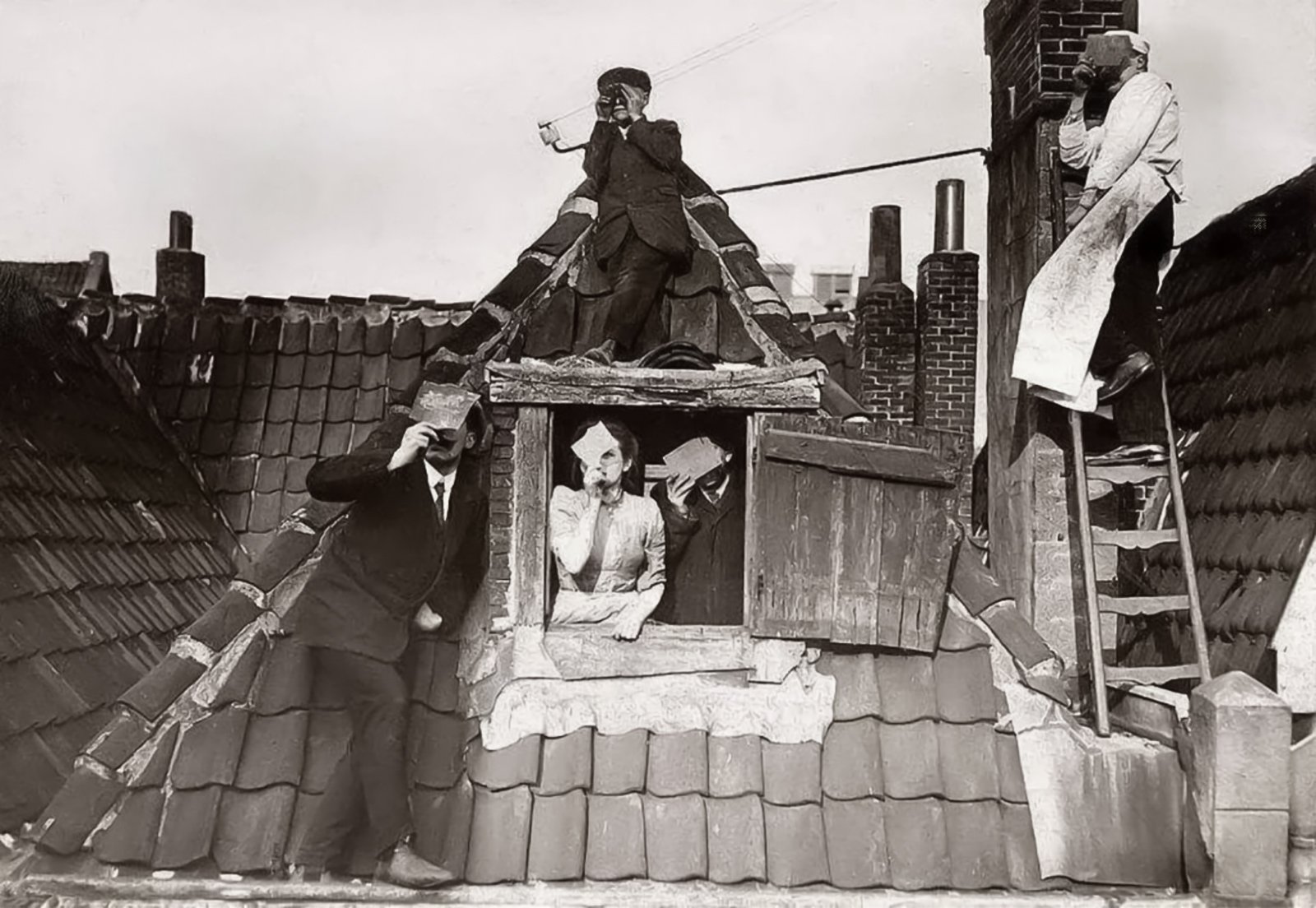
On April 17, 1912, Europeans stopped what they were doing and looked skyward for one of the strangest eclipses of the 20th century. In the Netherlands, the event lasted roughly 2.7 hours, with the Moon eventually obscuring about 96 percent of the Sun’s surface.
The eclipse was unusual because it was a hybrid, an eclipse that shifts between annular and total as the Moon’s shadow crosses Earth. The geometry that day was extraordinarily precise. At the point of greatest eclipse, the Moon’s apparent size exceeded the Sun’s by only a tiny fraction, producing a central path just 1.3 kilometers wide and maximum totality of approximately two seconds.
For people in Rotterdam, protective eclipse glasses were decades away. Observers improvised with smoked glass, photographic plates and other darkened materials, methods that were common at the time but that modern astronomers would consider unsafe.
Added Fact: In southern Netherlands, observers reported a spectacular “string of pearls” effect as sunlight streamed through valleys along the Moon’s irregular edge. Today these brilliant points of light are known as Baily’s beads.

Julie Ordon
Swiss model and actress.
She has appeared on the cover of the French edition of Elle several times, the French edition of Playboy in December 2007, Glamour, and Cosmo.
https://en.wikipedia.org/wiki/Julie_Ordon



Anitta
Brazilian singer-songwriter, dancer, actress, and occasional television host.
She began her singing when she was 8, joining the choir of Saint Luzia’s Parish in her neighbourhood at her maternal grandparents’ insistence.
https://en.wikipedia.org/wiki/Anitta_(singer)






Holly McGuire
English model and actress.
After graduating as a Fashion Designer from University back in 1998, at a time when she was only modeling for friends at college, she was scouted at London Graduate Fashion Week whilst modeling her own `final collection` and was signed to Samantha Bond Modeling Agency.
https://www.famousfix.com/topic/holly-mcguire