
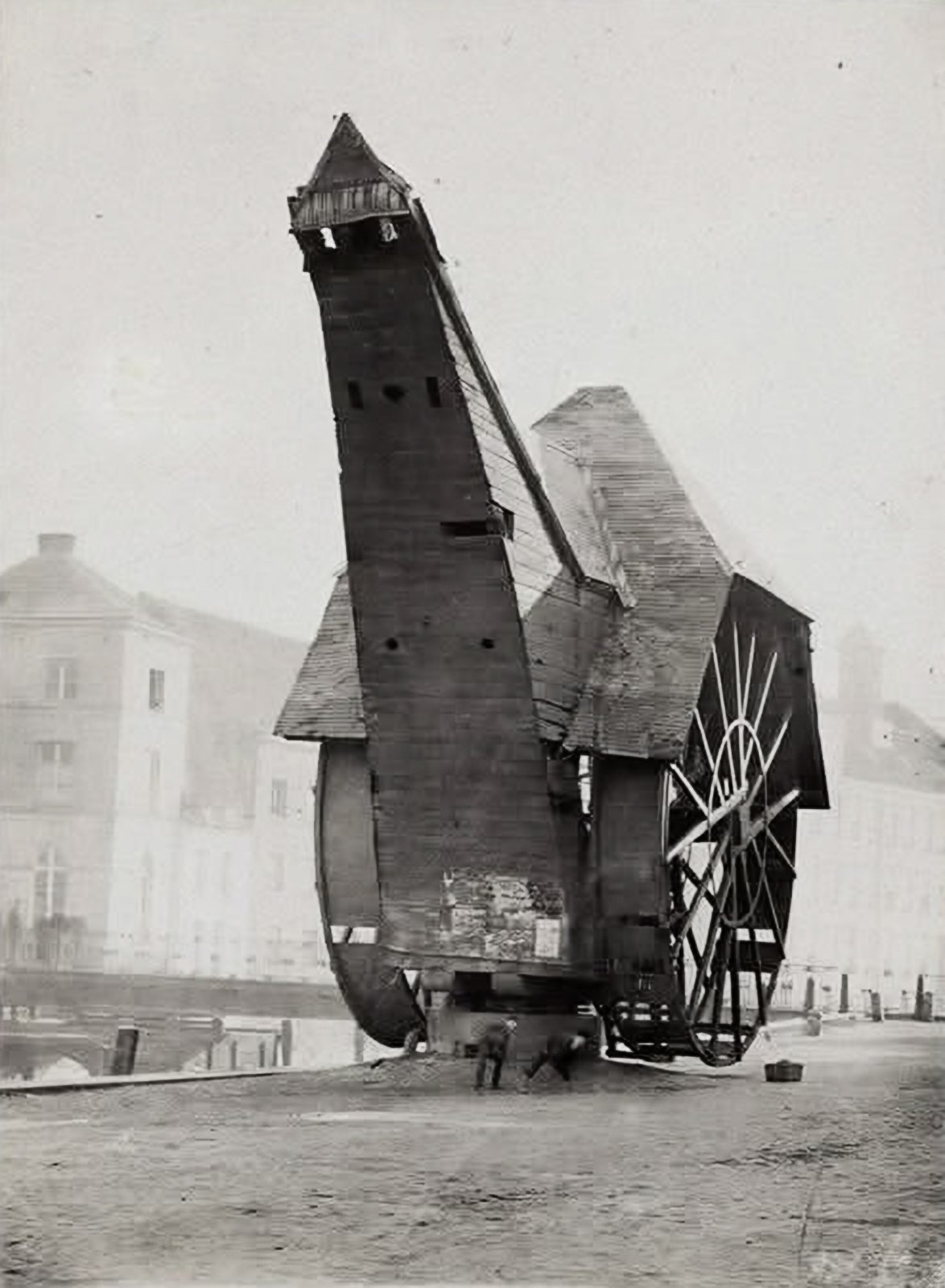
The treadwheel crane, also known as the walking wheel crane, stands out as one of the most remarkable lifting devices from ancient and medieval engineering. Powered entirely by human effort, it relied on workers walking inside a giant wheel—much like a hamster wheel—to generate the force needed to raise heavy loads through a pulley and rope system. Its origins trace back to Ancient Rome around the 1st century AD, where it played a crucial role in building grand structures such as temples and aqueducts.
The crane saw a resurgence during medieval times, particularly from the 12th to the 19th centuries, marking its golden age of use. These cranes became a common sight at harbor docks, castle sites, and large cathedral construction projects. In major European ports like Gdańsk, Strasbourg, and Bruges, they were essential for loading and unloading ships. Some were even built permanently into tall stone towers or robust timber frames, becoming both functional and architectural features.
As industrial technology advanced, the treadwheel crane’s dominance faded with the arrival of steam-powered machinery in the 19th century. Although no longer in practical use, many of these cranes have been preserved as historical monuments, serving as enduring symbols of human ingenuity and the physical determination that powered early construction and commerce.