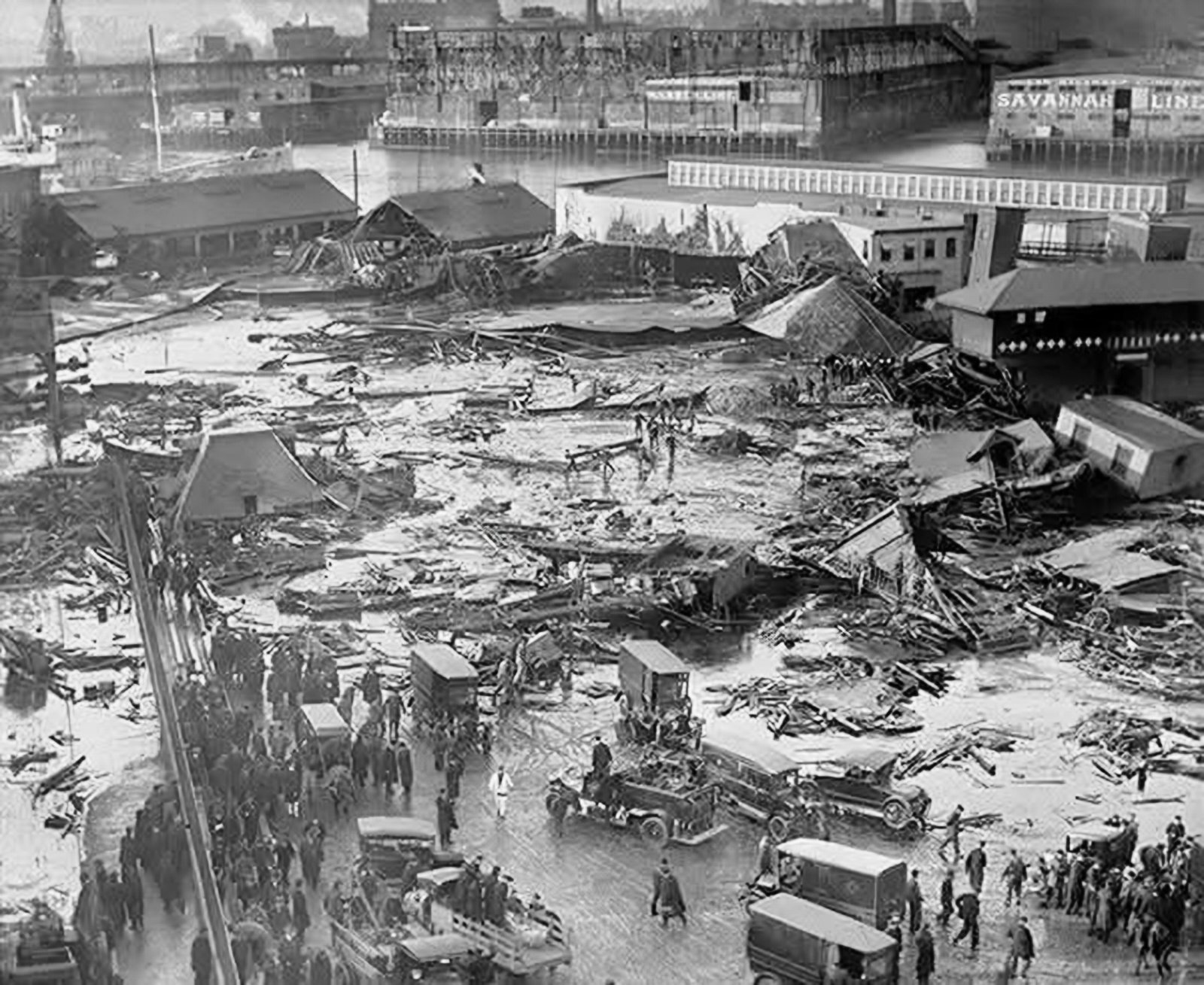
On January 15th, 1919, in what was probably the most bizarre disaster in United States’ history, a storage tank burst on Boston’s waterfront releasing two million gallons of molasses in a 15 ft-high, 160 ft-wide waves that raced through the city’s north end at 35mph destroying everything it touched.
The wave killed young Pasquale Iantosca, smashing a railroad car into the ten-year-old. It pinned Walter Merrithew, a railroad clerk on the Commercial Street wharf, against the wall of a freight shed, his feet 3 ft off the floor. He hung there as he watched a horse drowning nearby.
The wave broke steel girders of the Boston Elevated Railway, almost swept a train off its tracks, knocked buildings off their foundations, and toppled electrical poles, the wires hissing and sparking as they fell into the brown flood. The Boston Globe reported that people ‘were picked up and hurled many feet.
The Duga radar facility, also known as the “Russian Woodpecker,” was a Soviet over-the-horizon radar used for early warning of missile launches during the Cold War.
Location: Near Chernobyl, Ukraine Size: Approximately 150 meters high and 700 meters long Power: Over 10 megawatts, disrupted radio communications worldwide
After the Chernobyl disaster in 1986, the facility was abandoned. Today, it stands as a ghostly legacy of the Cold War, attracting historians and adventurers alike.
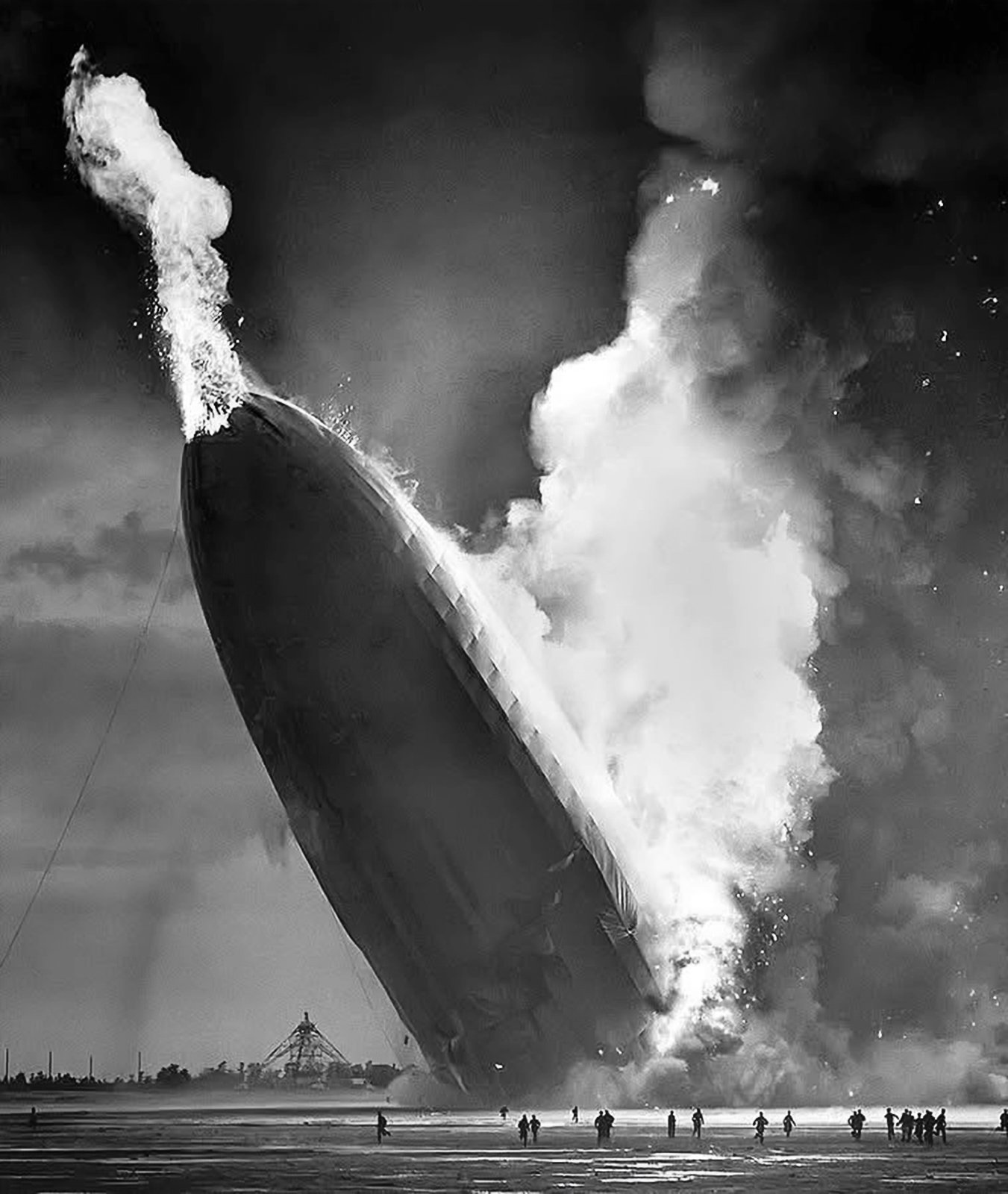
On this day in 1937, the Hindenburg catches fire and crashes in New Jersey. Somewhat ironically, the airship was then celebrating the one year anniversary of its first transatlantic flight. The German airship was a marvel of its time. It could cross the Atlantic in less than 3 days—about twice as fast as the ocean liners of the day! Not only that, but passengers flew in more style and comfort than you might imagine. They had their own cabins and bunk beds. They also had a public dining hall, a lounge, and a promenade where passengers could look out windows. Oddly, the hydrogen-filled airship even contained a small smoking lounge.
During its lifetime, the Hindenburg made 62 successful transatlantic crossings. Unfortunately, the 63rd flight would end in tragedy. The Hindenburg departed Frankfurt on the evening of May 3, 1937, with 36 passengers and 61 crew members aboard. It followed a northern track across the Atlantic Ocean and reached first Boston, then New York, during the afternoon of May 6. It was scheduled to land at Lakehurst Naval Air Station in New Jersey at 6:00 p.m., but it arrived a few hours early. Weather conditions in the area were poor, so the airship turned and flew around the coast of New Jersey for a while. By about 7:00 p.m., it was receiving messages to come back and make the “earliest possible landing.”
The Hindenburg returned to the Naval Air Station and dropped its forward landing lines at 7:21 p.m. The events that followed have been the subject of some controversy. What, exactly, caused the airship to catch fire? Scientists have long debated the matter, but it seems to have been some combination of leaking hydrogen and an electrostatic spark from the atmosphere. Whatever the cause of the initial spark, the airship was quickly consumed. Some passengers were then gathered on the promenade deck, watching the landing. As the ship lurched downwards, they began jumping out of windows. One passenger was in the dining room when the fire began. He went to find his wife, who had returned to their cabin for her coat. Neither of them survived. Another woman was in the dining room with her three children. She and her two sons jumped to safety, but her 16-year old daughter died in the crash. She’d left the dining room to go look for her father.
In general, those who were deep inside the ship died. Those who were close to a quick exit survived. The entire ship was afire in less than 40 seconds. As with so many tragedies, there were heroes that day! Passengers and crew fled the burning ship as it went down, but many American sailors were a part of the landing party. Some of them turned and ran *in* to the burning airship, trying to save passengers and crew. One of the sailors on the ground that day was Richard Antrim, who would go on to receive the Medal of Honor for his actions during World War II.
There had been other crashes before, but this one, in particular, stunned the world. A media crew had happened to be there to film the landing, so the entire crash was caught on film. Reporter Herb Morrison famously narrated the crash as it happened: “Oh, it’s crashing . . . oh, four or five hundred feet into the sky, and it’s a terrific crash, ladies and gentlemen. There’s smoke, and there’s flames, now, and the frame is crashing to the ground, not quite to the mooring mast. Oh, the humanity, and all the passengers screaming around here!” Of the 97 people aboard, a remarkable 62 people survived the crash. Tragically, 13 passengers, 22 crew, and 1 member of the landing party were killed. The crash was so horrific that it marked the end of these airships for commercial travel.
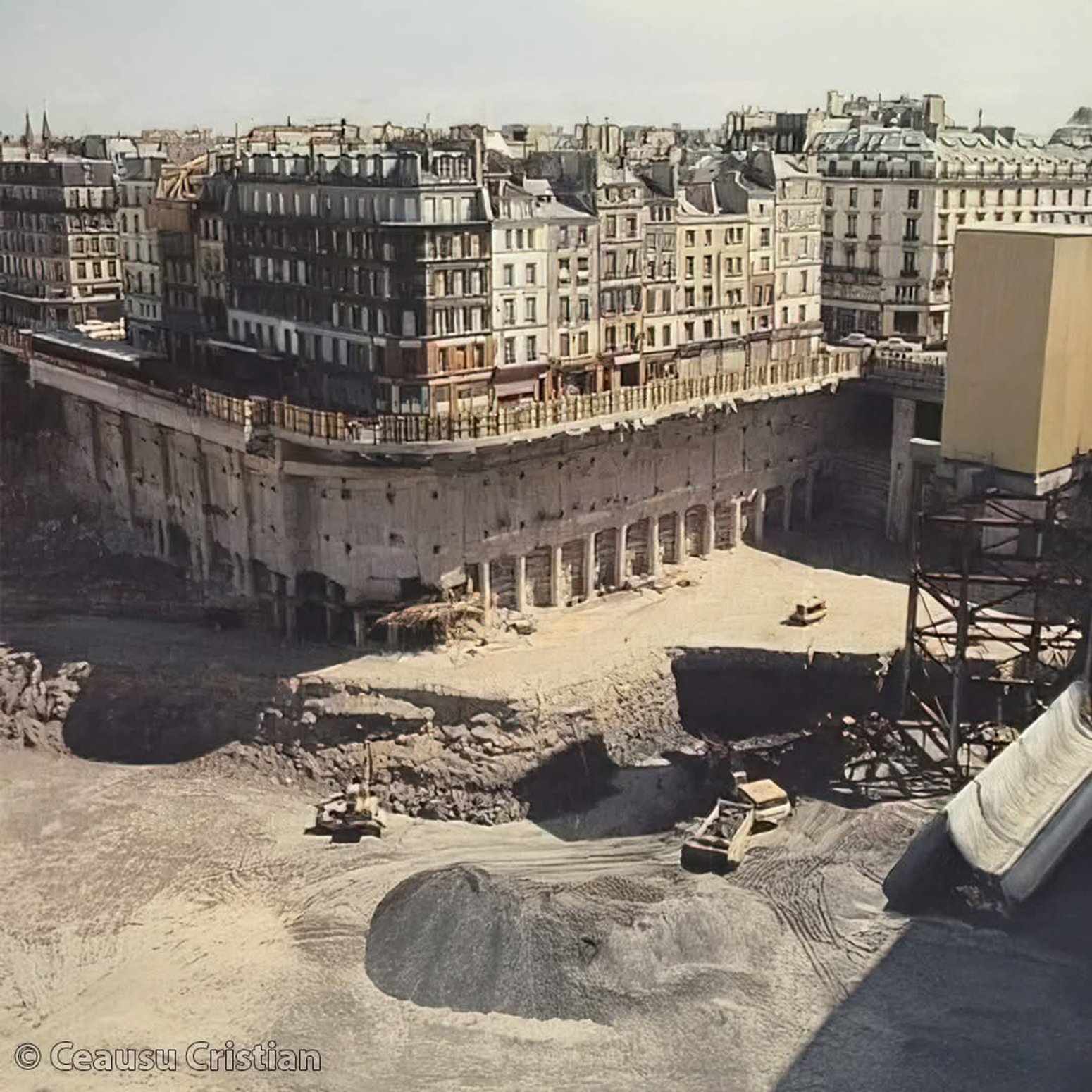
This remarkable photograph from 1973 captures the Les Halles excavation in Paris, showcasing an architectural history concealed under the bustling city streets. The buildings appear to float above a deep five-story void, supported by reinforced frameworks, while the Fountain of the Innocents precariously hangs on scaffolding to the right. Below, remnants of structures that are centuries old, some exceeding 800 years, lie partially uncovered. But what motivated the decision to overlay these historical layers with new developments? Was it merely a step toward urban advancement, or an effort to erase traces of the past? Historians refer to this phenomenon as the “culture layer,” and with each dig, more forgotten structures come to light—prompting inquiries about what additional history remains concealed and the reasons behind it.
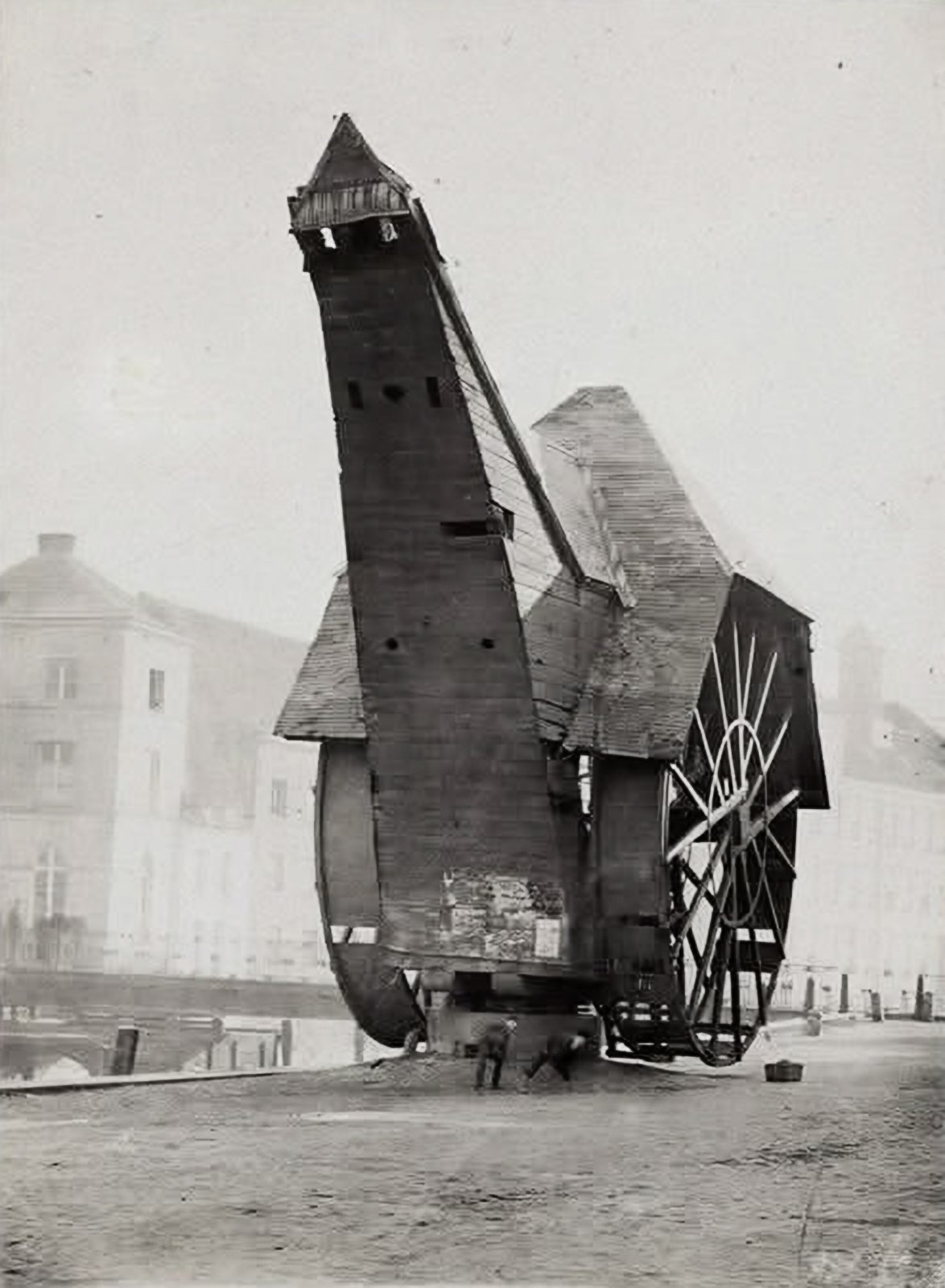
The treadwheel crane, also known as the walking wheel crane, stands out as one of the most remarkable lifting devices from ancient and medieval engineering. Powered entirely by human effort, it relied on workers walking inside a giant wheel—much like a hamster wheel—to generate the force needed to raise heavy loads through a pulley and rope system. Its origins trace back to Ancient Rome around the 1st century AD, where it played a crucial role in building grand structures such as temples and aqueducts.
The crane saw a resurgence during medieval times, particularly from the 12th to the 19th centuries, marking its golden age of use. These cranes became a common sight at harbor docks, castle sites, and large cathedral construction projects. In major European ports like Gdańsk, Strasbourg, and Bruges, they were essential for loading and unloading ships. Some were even built permanently into tall stone towers or robust timber frames, becoming both functional and architectural features.
As industrial technology advanced, the treadwheel crane’s dominance faded with the arrival of steam-powered machinery in the 19th century. Although no longer in practical use, many of these cranes have been preserved as historical monuments, serving as enduring symbols of human ingenuity and the physical determination that powered early construction and commerce.